Welcome to Tirana! Albania’s capital is one of those cities that completely blindsides you — in the best possible way. What used to be a drab, concrete sprawl is now a colourful, creative hub where crumbling Soviet-era buildings sit side-by-side with sleek cafés, design stores, and cocktail bars that could rival anything you’d find in Berlin. This is a city that’s constantly reinventing itself, and honestly, half the fun of being here is watching that transformation unfold in real time.
On your first day, you’ll get a taste of everything that makes Tirana so addictive: the high-end restaurants, the grungy architecture, the shady parks where locals gossip over espressos, and the museums that tell Albania’s wild, complicated story. You’ll sweat your way through underground bunkers that double as art installations, crane your neck at some of the most delightfully weird buildings in Europe, and—if you’re doing it right—eat your body weight in byrek. (You’ll also probably need a post-byrek nap, but don’t worry, there’s plenty of time for that, too.)
Tirana isn’t the kind of city that bowls you over with obvious beauty — at least, not at first. It’s messy and chaotic, occasionally baffling, and sometimes you’ll look around and think, what on earth am I looking at? But give it a few hours, and you’ll be charmed. There’s a warmth here that’s impossible to fake, a creative energy that seeps out of every street corner. Whether you’re sipping raki in a leafy courtyard, exploring Communist bunkers, or watching the city glow orange from Mount Dajti at sunset, Tirana feels like nowhere else in Europe.
So, on day one, we’re diving straight in — history, art, architecture, food, and a generous helping of caffeine. Get your walking shoes ready, pack a sense of curiosity (and possibly a towel, because it’s going to be hot), and let’s get to know Albania’s wonderfully weird capital.
Tirana isn’t the kind of city that tries to impress you straight away. It’s not Paris, all polish and perfection; it’s scrappy and colourful and gloriously unpredictable. Half the streets look like they were designed by five different people who never met, and that’s exactly what makes it fascinating.
If you’ve only got two days in the Albanian capital, you’ll quickly discover it’s a city of contrasts: Communist bunkers turned into art spaces, shiny skyscrapers rising beside peeling pastel apartments, and cafés so hip they’d make Berlin blush. It’s part grit, part glamour, and a whole lot of personality.
This two-day itinerary will take you through the very best of Tirana — from underground museums and cable car views to street markets, modern mosques, and surprisingly excellent sushi. It’s a city that keeps surprising you, and by the end of your visit, you’ll be wondering why everyone else is still sleeping on it.
Day One in Tirana

I don’t hold too many strong opinions about Tirana, but the one I’m going to insist you listen to? Getting to Bunk’Art 2 before 9:30 a.m., which is when this bunker-turned-museum opens to the public.
This is one of those situations in which the time of day that you visit an attraction can entirely dictate how much you get out of it. You can trust me on this: I made the mistake of hitting up Bunk’Art 2 in late-morning in the middle of summer. The experience was stifling.
Flashback to me and Dave: underground on a hot day, crammed into a tiny room with a dozen sweaty people, attempting to focus on vivid descriptions of torture. It wasn’t the most comfortable we’ve ever been.
By visiting at opening time, then, not only will the temperatures in the bunker be much more manageable, but you won’t have tons of people around you, all trying to read lengthy descriptions at the same time.
Odds are, I haven’t exactly sold the entire experience to you, so let me share a little about why I think Bunk’Art 2 is so important to visit.
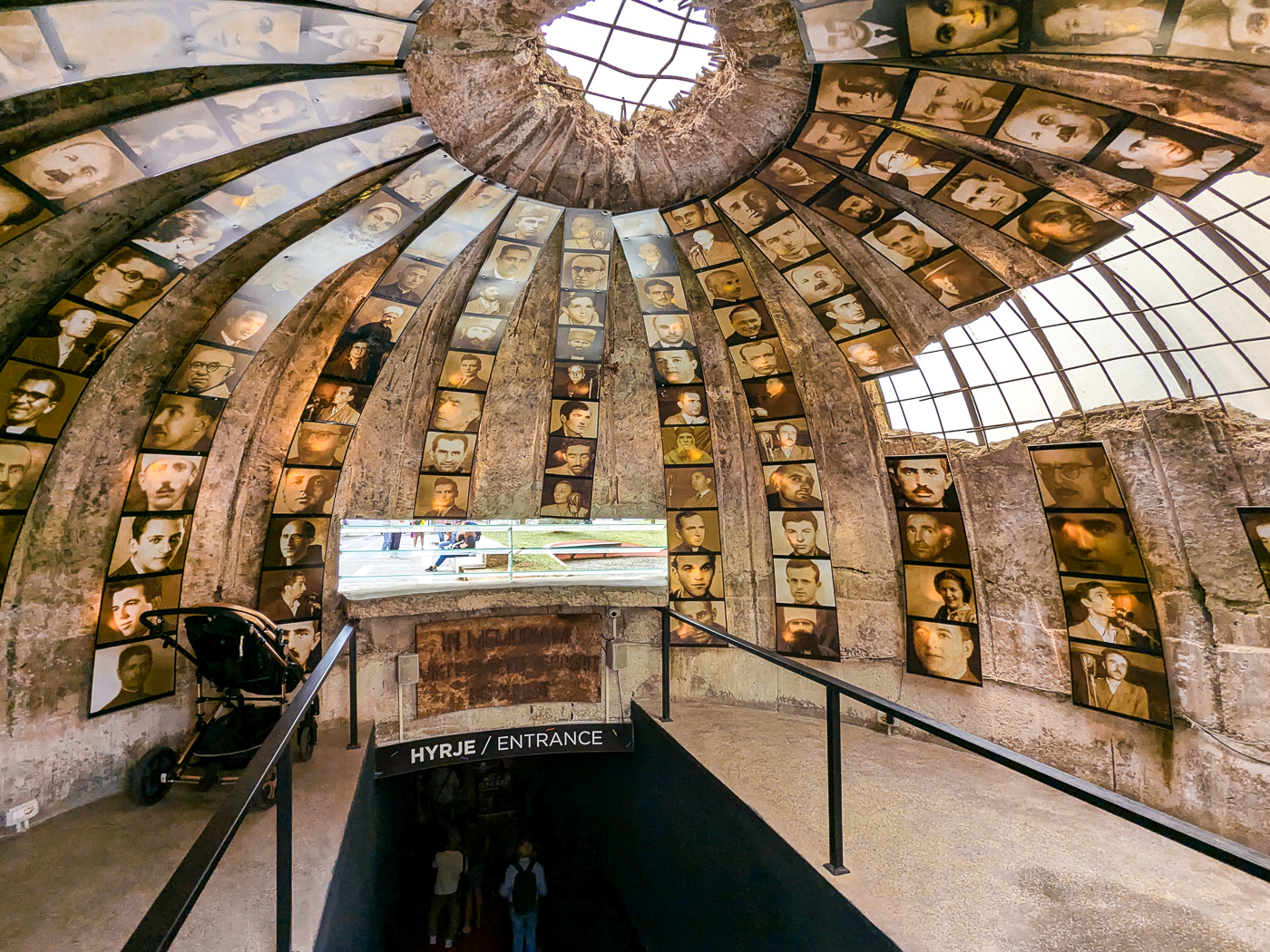
This bunker operated as a nuclear shelter during the reign of Enver Hoxha: the country’s former leader who spent 40 years convinced the entire world was plotting his downfall. Hence: the bunker. And many more bunkers. Because Hoxha somehow managed to build 750,000 bunkers in Albania, and you’ll see tons of them as you travel around the country.
But back to this bunker.
Inside, you’ll descend through cold concrete tunnels, lined with haunting black-and-white photos and propaganda posters that once served as state truth. You’ll learn about the unbelievable levels of surveillance, the forced labour camps, and the truly barbaric punishments handed out to anyone who dared to step out of line.
It’s dark and it’s hard to read about so much tragedy, but it’s also important. Albania is so affected by its recent history that you’d be doing the country a disservice to rock up and pay little attention to it. If you want to understand modern Albania — its resilience, pride, and independence — you have to start here.
Resurfacing into the blinding sunlight felt more than a little jarring, so I recommend taking a seat on a bench for a few minutes to let your brains reset.
Stroll a few minutes down the street to Skanderbeg Square, the heart of Tirana and the perfect spot to remind yourself you’re, y’know, still alive. This vast plaza, bordered by government buildings, museums, and the Et’hem Bej Mosque, is named after Albania’s national hero, and there’s even a giant equestrian statue of him mid-charge as a focal point.
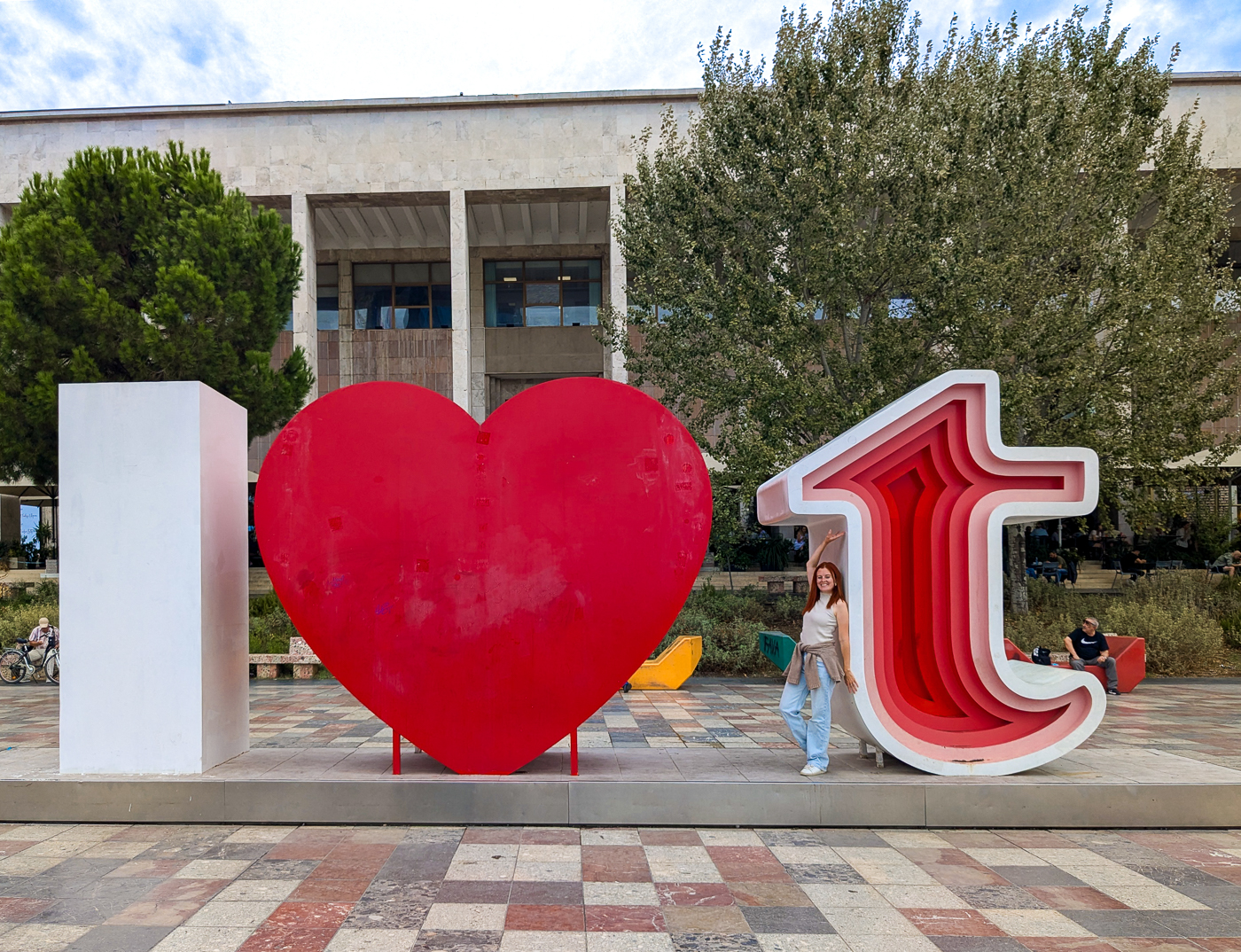
The square’s always buzzing: kids zooming around on scooters, pensioners arguing on benches, and buskers battling the traffic noise. Pop inside Et’hem Bej Mosque, one of the few religious buildings to survive the Communist ban on religion, and look up: the ceilings are intricate, hand-painted, and absolutely beautiful. Climb the Clock Tower next door for a view over the square; it’s one of the best spots in the city to do so.
By now, you’ll probably be starving, and Tirana’s food scene is one that’s worth exploring. Grab a byrek for lunch: golden, flaky pastries stuffed with cheese, spinach, or meat — they make for the perfect mid-morning snack. You’ll find them on practically every street corner, but I’m partial to Byrek Special “Luani”, a little spot just a few minutes’ walk from the square.
Before you rush off to the next attraction, take a little time to wander. Tirana is best understood at street level: the honking cars, the smell of roasting corn, the endless parade of tiny espresso bars. You’ll see half-renovated buildings painted in neon colours, murals covering entire apartment blocks, and stray cats sunning themselves on steps. It’s messy, loud, and endlessly photogenic.
Next, it’s time to wander over to the Old Bazaar, the main market in Tirana and one of my favourite places in the city.
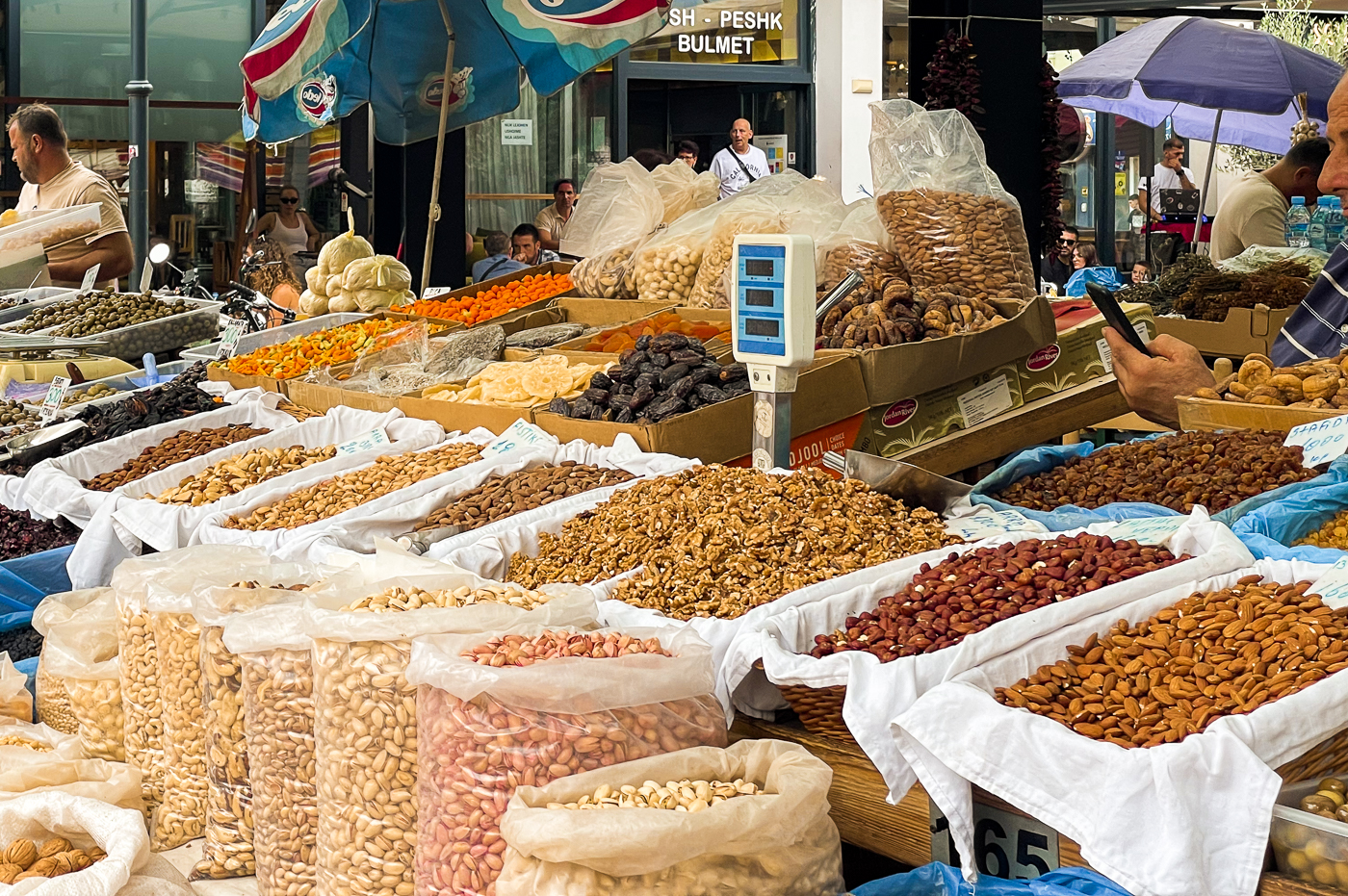
The old bazaar was chaotic in the best way possible, with stalls overflowing with olives, figs, nuts, fruits, and alarming quantities of raki (the local liquor). That raki, by the way, is often sold in old plastic water bottles — something I found both hilarious and alarming. Still, at a price of €3 per 500 ml, you can’t complain about the price.
I found the people-watching to be one of the most enjoyable parts, watching the vendors chat to their regulars, as elderly Albanians haggled aggressively over apricots.
Just a short walk away, you’ll find Tirana Castle, which dates way back to the Byzantine era; to the year 1300. Don’t get too excited, however, as very little of the castle stands today — just a small ivy-covered wall — but that doesn’t mean it isn’t worth visiting.
These days, there’s a small complex of stores and cafes inside the walls of the fortress, and I’d recommend heading here if you’re in need of a souvenir or two. In particular, I recommend heading to Subashi Olive Oil Shop, where I bought a beautiful magnet and mortar and pestle, both crafted out of olive wood.
Next up: the Mosque of Namazgah, which is a relatively new addition to Tirana. It opened in 2024 and instantly became the largest mosque in the Balkans. Walking around it had me feeling as though I’d stepped foot in Istanbul. Tourists are able to visit (and garments are provided to help you cover up), and it’s worth taking a look inside to see those beautiful ceilings. And unlike Istanbul, you won’t have to share the space with roughly 10,000 tourists!
It’s just a short walk over to Saint Paul’s Cathedral, which was quite a surprise. I hadn’t seen another church like it before!
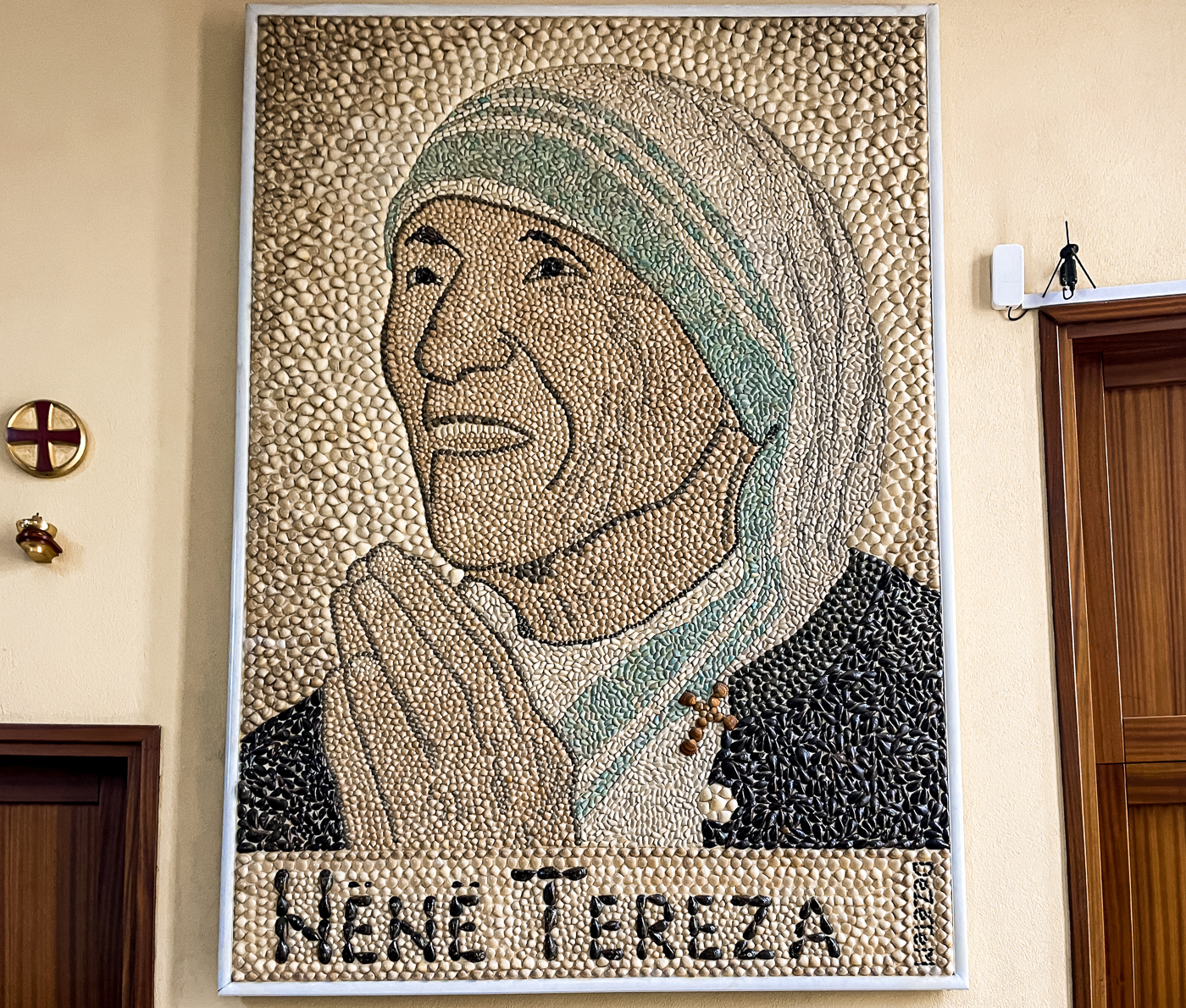
Inside it’s minimalist and modern, with clean cream walls and curved lines. Inside, you’ll find a mosaic of Mother Teresa — she was ethnically Albanian, so you’ll find lots of Mother Teresa-themed souvenirs while you’re in the country! — and a stained glass portrait of Pope John Paul II. Both were unexpected.
And then, as sunset starts to approach, there’s only one place to go: the Pyramid.
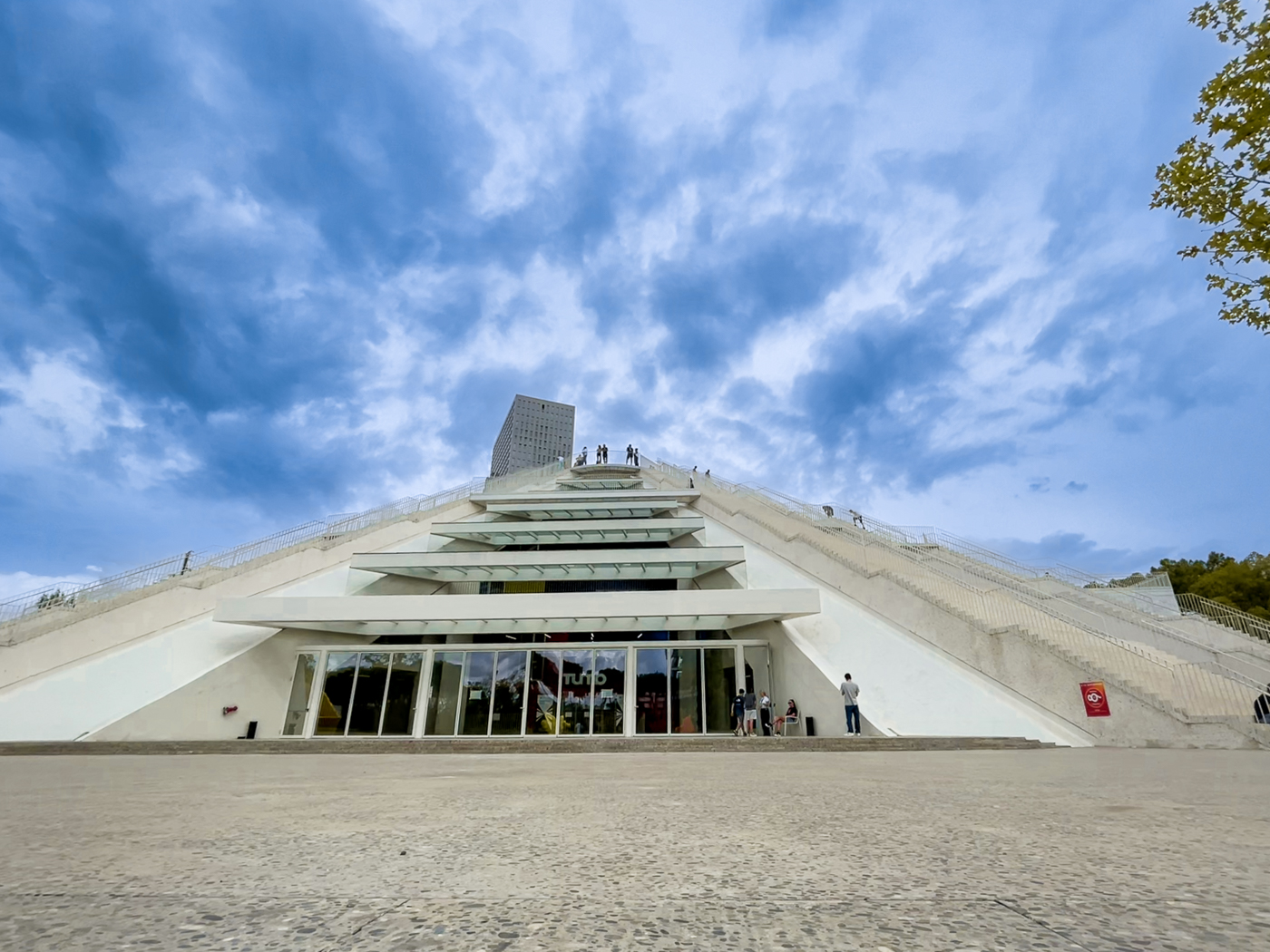
Once a grungy, brutalist monument, Tirana’s iconic pyramid has since been reborn as the city’s most modern gathering place.
For years, this structure sat abandoned in the centre of the city, covered in graffiti and weeds. A few years ago, the city decided to renovate the pyramid, clean it up, add some staircases, and turn it into a cultural hub, full of workspaces, classrooms, cafes, and studios. As a tourist, there’s isn’t much of interest inside, but it’s the top of the pyramid that’s worth visiting.
I loved the views over the city from up there, and especially at sunset, when I could watch the buildings light up and the sky turn orange. It’s one of my favourite viewpoints in the city and a great way to end your day of activities.
Next up: dinner!
If you’re celebrating something special, end your day with dinner at SALT, which is hands down, our favourite restaurant in Tirana. We went for Dave’s birthday, and the staff went above and beyond. Think chic interiors, a buzzy crowd, and food that was nothing short of amazing.
The sushi was shockingly good — and I’m saying this as someone who’s eaten sushi in Japan! — and the steak was grilled to perfection. Pair it with some of their cocktails (the basil gin smash was my favourite), and you’ll be finishing your first day in Tirana in absolute style.
Day Two: Hipsters, Hikes, and a Haunting History Lesson

For our second day in Tirana, we’re going to learn even more about Albania’s controversial past, but we’ll also be taking plenty of breaks: getting out in nature, checking out some hipster cafes, and exploring more of the city’s architecture.
Kick off your day in Blloku, the city’s coolest neighbourhood and former stomping ground of Albania’s Communist elite. You can barely imagine it now, but back in Hoxha’s day, ordinary citizens weren’t even allowed inside this part of the city… and now it’s full of coffee shops, rooftop bars, and an abundance of avocado toast.
Our favourite spot for breakfast was Mulliri Gourmet, a buzzy cafe with outdoor seating that Dave and I found perfect for people-watching. The food was great, too — I went with the avocado toast (it had to be done!) while Dave ordered something called Grandma’s Fried Dough (a savoury doughnut topped with feta and honey: so good!)
Once you’re fed and fuelled, it’ll be time to summon your first Patoko.
Patoko is essentially Tirana’s version of Uber/Lyft/Grab/Bolt, and you’ll want to use it a few times while you’re in the city in order to get around easier. It’s not the slickest app in the world, and I often found myself waiting for 15 minutes for a driver to accept my ride and reach my departure spot, but it gets the job done.
Open up the app, and set your destination to Dajti Express Cable Car, which is a 20 minute drive outside of the city.
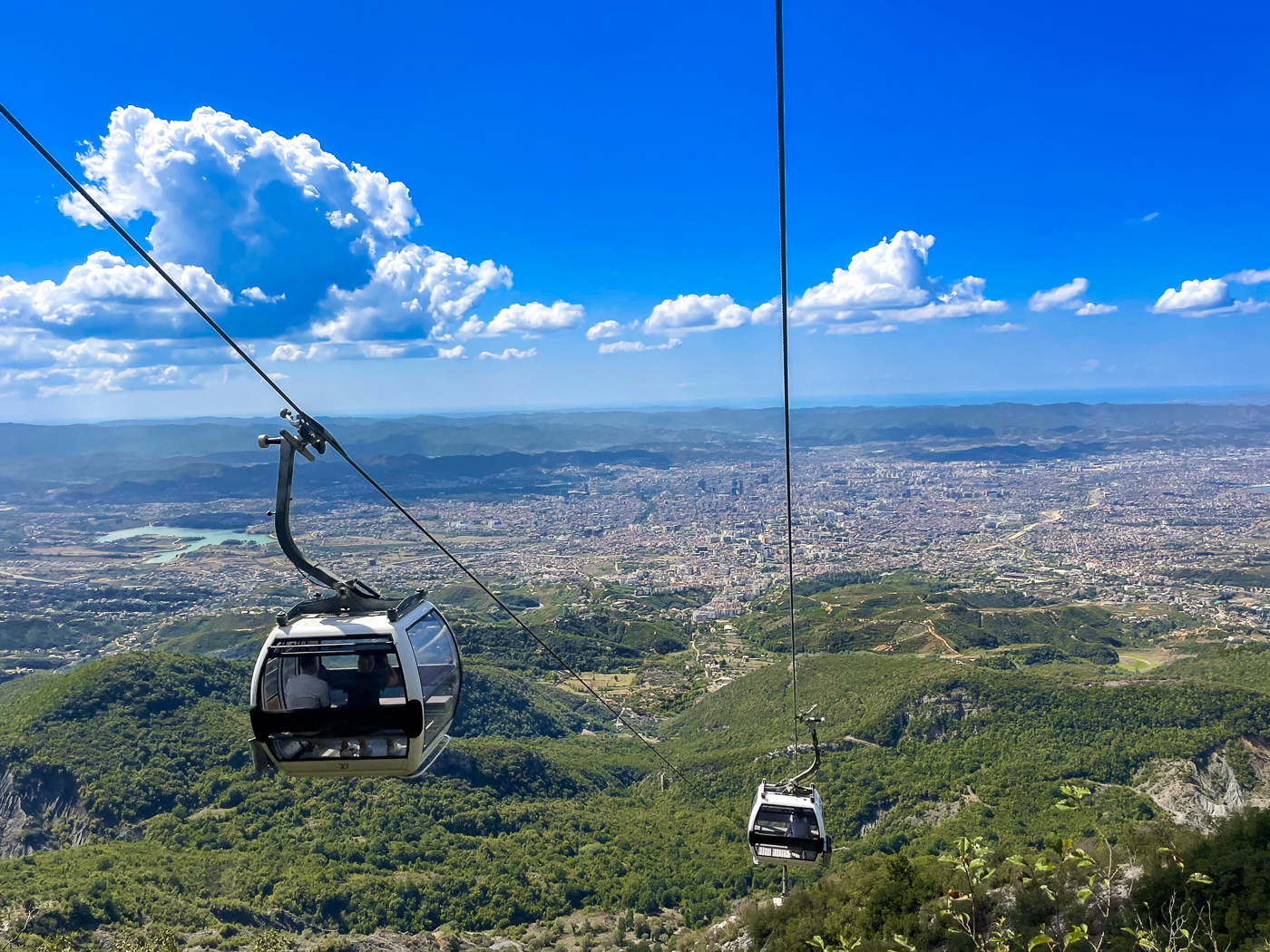
Dajti is the name given to Tirana’s tallest mountain, standing at an elevation of 1,600 metres (5250 ft.)
You may not be surprised to hear, then, that the cable car ride up said mountain is more than a little lengthy. And I loved it. We spent a solid fifteen minutes inside the cable car, cruising past the outskirts of Tirana, farmland, forests — even the occasional abandoned bunker — then finally the rugged stone cliffs of Dajti.
If you luck out with the weather, like we did, the views are going to be absolutely phenomenal: I couldn’t believe that we could see the entirety of Tirana, the mountains and countryside that surrounded it, and even the shores of the Adriatic Sea in the distance.
The cable car doesn’t quite take you to the summit of Dajti, but to a cute little lookout instead, where you find several viewing platforms, a cafe and bar, and a handful of hiking trails. There’s a bunch of other activities up here, too: for kids, you’ll find a mini golf course, roller-blading, a zipline adventure park, and horseback riding. If you’d prefer something a little more adventurous, you could try your hand at paragliding or sign up to fire a few rounds at the nearby shooting range.
Dave and I are fanatical about hiking, so there was only one activity we were interested in: we wanted to go hiking. If you love to hike too, well… I hope you’ll have more success than we did.
Signage at Dajti was unfortunately sparse and vague, and when we tried to follow a path labeled “View to the North from Dajti”, the directions all but disappeared. Yes, within 10 minutes we were lost and confused, contemplating whether the path we were on would really require us to climb a steep hill through a dense forest on an unmarked trail.
In the end, we gave up, but if you’re more persistent than us, you may have greater success.
Whether the activities appeal or not, this is a beautiful spot to wander around. It’s quiet, green, and far removed from the bustling streets of Tirana. If you’re organised (or just hungry), this would be a great spot to bring a picnic; this would be the perfect spot to sit in the sun with some local bread, cheese, and fruit from the Old Bazaar.
As I mentioned, there’s also a restaurant/cafe and bar at the top, so there’s options for food and drink here, too. This is one of my favourite spots in Tirana, so I’d definitely recommend visiting.
When you’re ready to move on, head back to the cable car and start your descent back down to Tirana. Our next stop is going to be a fascinating one.
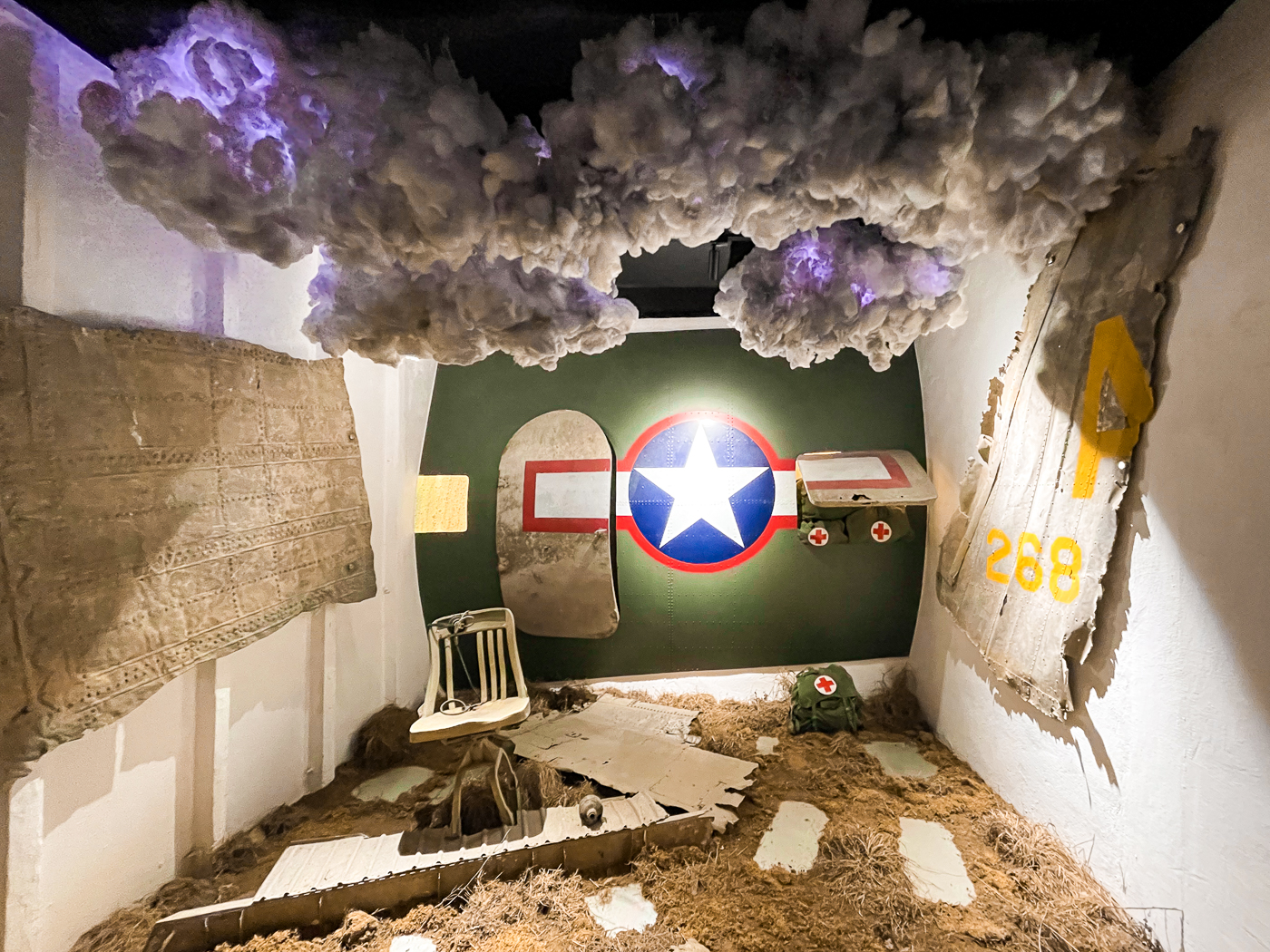
Bunk’Art 1 is the big sister of Bunk’Art 2, which you would have visited yesterday. It’s located beside the cable car station, so makes for a short walk once you’re back on solid ground. I found Bunk’Art 1 to be a more pleasant experience, if I’m being honest, as it was way less crowded, claustrophobic, and hot. And the history you learn inside this bunker helps you piece together more of Albania’s complex past.
Bunk’Art 1 focuses more on the modern history of Albania, taking you from World War II to the rise (and madness) of Enver Hoxha’s rule. You’ll wander through dozens of concrete corridors and small rooms packed with dusty uniforms, historic photos, and eerie recordings of patriotic anthems. Somehow it manages to be unsettling, bleak, and compelling, all at once.
Before coming to Albania, I knew the bare minimum about its past. Essentially: paranoid man built a million concrete bunkers. By the time I walked out of Bunk’Art 1, I couldn’t stop talking about the tragic, brutal history of this country — and it’s a history that so few people are even aware of. I learned so much about Albania and Hoxha that even now, I occasionally launch into spontaneous soliloquies about its history to friends and families.
We spent roughly two hours inside Bunk’Art 1, and once we were back outside in the fresh air, we were ready to head back into central Tirana. I recommend calling a Patoko and heading back to Skanderbeg Square.
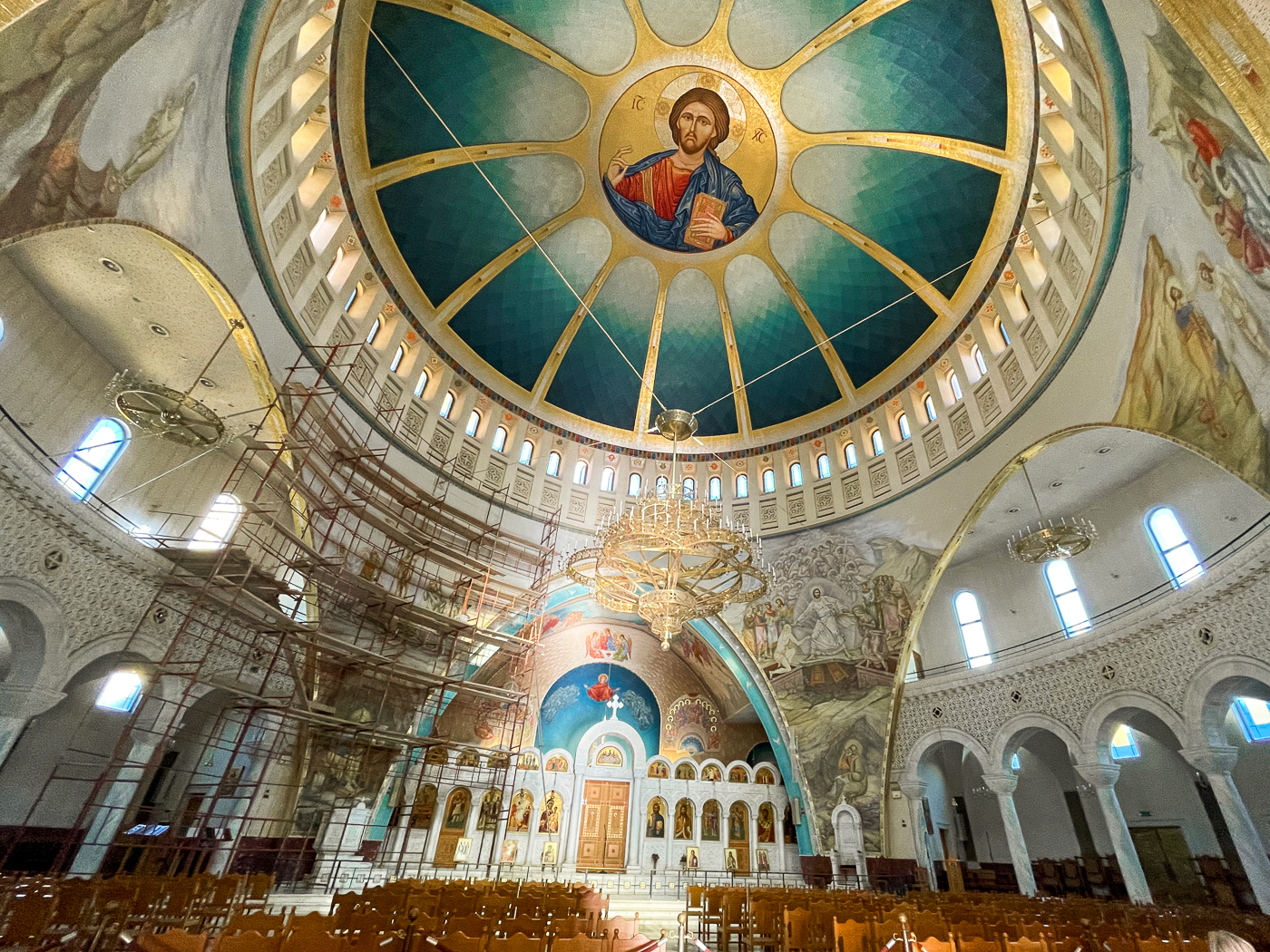
After spending some more time soaking up the atmosphere at Skanderbeg Square, make your way over to the Resurrection of Christ Orthodox Cathedral, which si the third-largest Orthodox church in Europe.
We’ve already seen a few religious buildings in Tirana, but I found this one particularly interesting, as it was so different to other cathedrals I’d seen so far. From the outside, it feels imposing: this gigantic white dome with gleaming gold accents alongside a separate bell tower; the style of it actually reminded me of a mosque.
Inside, though, it’s all gold and turquoise mosaics and murals, plus a huge painting of Jesus on the interior of the main dome. It’s beautifully done and even though there was construction taking place when we visited, it was still worth checking out.
From the cathedral, it’s just a short walk to what turned out to be my favourite museum in the city: the House of Leaves.
Now, if you’re anything like me, you might be feeling well and truly burned out on Albanian history. I felt so emotionally drained by this point in my itinerary I very nearly skipped the museum entirely. I mention this because if you’re contemplating doing the same, I’d urge you to find the energy to visit anyway, because I thought this museum was so good.
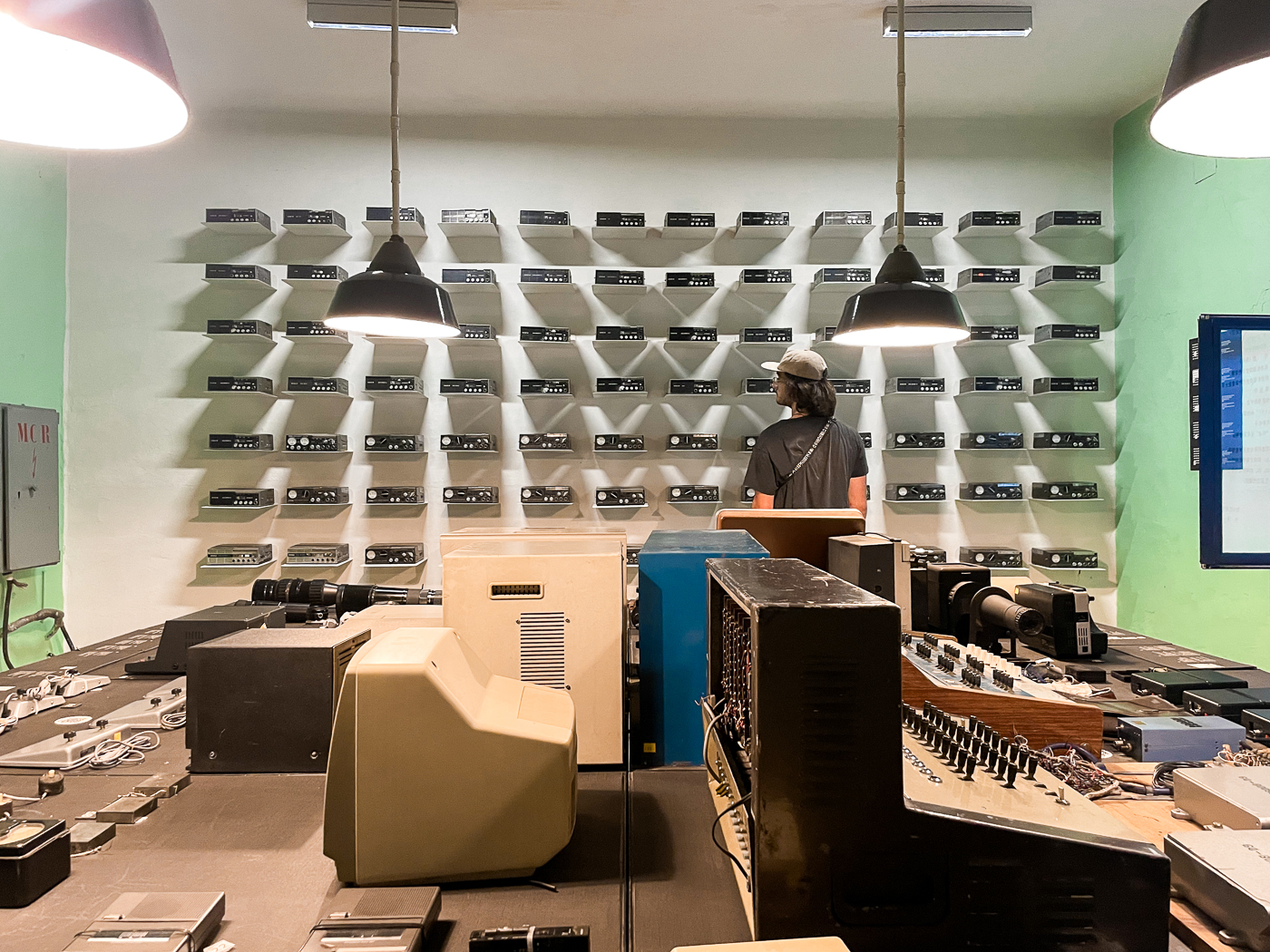
The building used to be the headquarters of Albania’s secret police, and the exhibits inside are all about how the country’s residents were spied on during Communist times. You’ll find hundreds of examples of surveillance tools, examples of dossiers written about neighbours, and eerie propaganda films once broadcast across the country, showing how anyone who stepped out of line was watched, recorded, and caught.
The part that I found most unsettling was learning that most of the country’s spies weren’t government agents at all. They were regular citizens of Albania. Neighbours, friends, and even family members. There might be hidden cameras or recording devices in your own home and you wouldn’t even know — but you’d have to assume they were there, just in case. You’d have to be careful about what you said to every single person you met.
Can you imagine having to live like that? In a situation where you couldn’t fully trust a member of your own family not to report you to the government?
I came away from the House of Leaves feeling nervous and paranoid, and couldn’t fully relax in my hotel room that night.
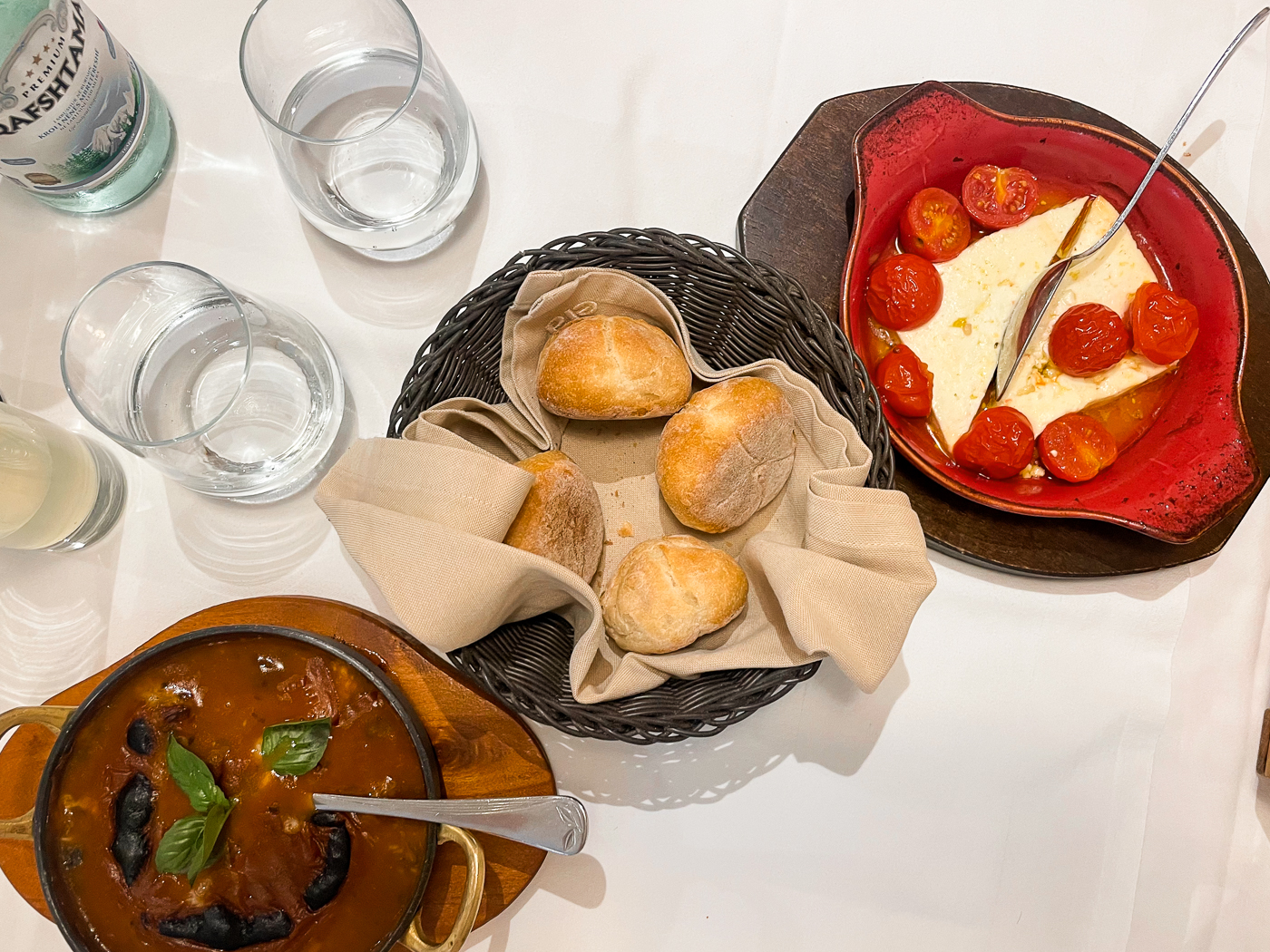
At this point, your brain’ll be full of history, your legs’ll be tired, and you’ll be more than ready for a good meal. One of my favourite local restaurants in the city is Era Restaurant, in the Blloku district. It’s popular with locals and tourists alike, serving up traditional Albanian dishes.
Dave and I tried to sample as much of the menu as possible: Djath Furre (baked sheep’s cheese bubbling with vegetables), qofte (oven-baked meatballs in a rich tomato and plum sauce), and Kosovo sausages with lima beans. All of the dishes were amazing, hearty, home-cooked, and a great introduction to the country’s cuisine.
If you’ve still got energy after dinner, stick around Blloku — this is where Tirana parties. Start at Radio Bar, which serves excellent cocktails in a space that feels like a quirky, cosy living room, or swing by Nouvelle Vague for craft gin and vibey lighting. If you’re more into people-watching, grab a raki at Komiteti Kafe-Muzeum, part-bar, part-museum, and fully chaotic.
And That’s How to Spend Two Days in Tirana!
In Tirana, I found myself both wishing I had longer in the city while aching to get home so I could sit down and start writing this guide.
What a cool city! Tirana, I think, is the perfect blend of modern, colourful, and historic, and I loved getting to spend time exploring its streets. Sometimes it felt like every corner I turned would lead me to an unexpected discovery, like a mural, hipster cafe, Communist-era mosaic, art installation, or crumbling bunker.
This is a city that rewards curiosity, and while two days won’t quite give you enough time to wander hither and thither, you’ll still be able to have a good look around and uncover a few of its many surprises.
I hope you have an amazing time in this city, then come back here and tell me all about it! :-)
Where to stay in Tirana: Blloku Suites (€55 a night) — Dave and I absolutely adored our colourful room at Blloku Suites! It’s located in the coolest neighbourhood in Tirana — Blloku — surrounded by all the best bars and restaurants. Despite that, the room was soundproofed, so we weren’t disturbed on busy weekend nights. The internet was super fast, the shower pressure was great, and the air conditioning worked well. We met the owner outside the property after flying into Tirana, which made checking in easy.
Make Never Ending Footsteps a preferred source in Google so you can see more of my travel guides.