
I’ve been visiting Phnom Penh for well over a decade.
I first stepped foot in this vibrant city way back in 2012 and most recently returned last year. Yes, it’s certainly changed a lot since that initial visit! But that’s been one of the greatest joys of my regular returns; seeing how this city has grown and evolved into somewhere that’s a hell of a lot of fun to spend time in.
Phnom Penh is a city that’s crammed full of history, and it’s important to take the opportunity to learn more about the atrocities that have taken place in its past. I always urge visitors to visit the Killing Fields and Tuol Sleng Genocide Museum, as difficult as the experiences may be, because it’s so important to remember and honour the millions of Cambodians who were murdered by the Khmer Rouge.
At the same time, Phnom Penh is so much more than its past and it’s thrilling to dive headfirst into its exciting present, too.
In 2026, Phnom Penh is a bustling city with all the chaos that’s common to Southeast Asia, but with its own unique spin on it all. You might be surprised to learn that this is a destination with high-end rooftop bars, hipster cafes serving avocado toast and flat whites, and some seriously modern accommodation. As you explore the city, you’ll encounter world-class museums, glistening temples, and lively markets, then get to relax from it all beside the chilled-out waterfront.
A lot of visitors to Cambodia skip over Phnom Penh, but I think that’s a huge mistake. Sure, it doesn’t have the temples of Angkor or the beaches of the south, but Phnom Penh has the history and museums that are going to help you understand Cambodia and put many of its complexities into context.
I love this city and it’s taken me a decade to put this itinerary together, simply because I wanted to ensure I could do it justice.
Without further ado, then, here is how I recommend spending two days in Phnom Penh:
Day One: The Hard, Important Parts
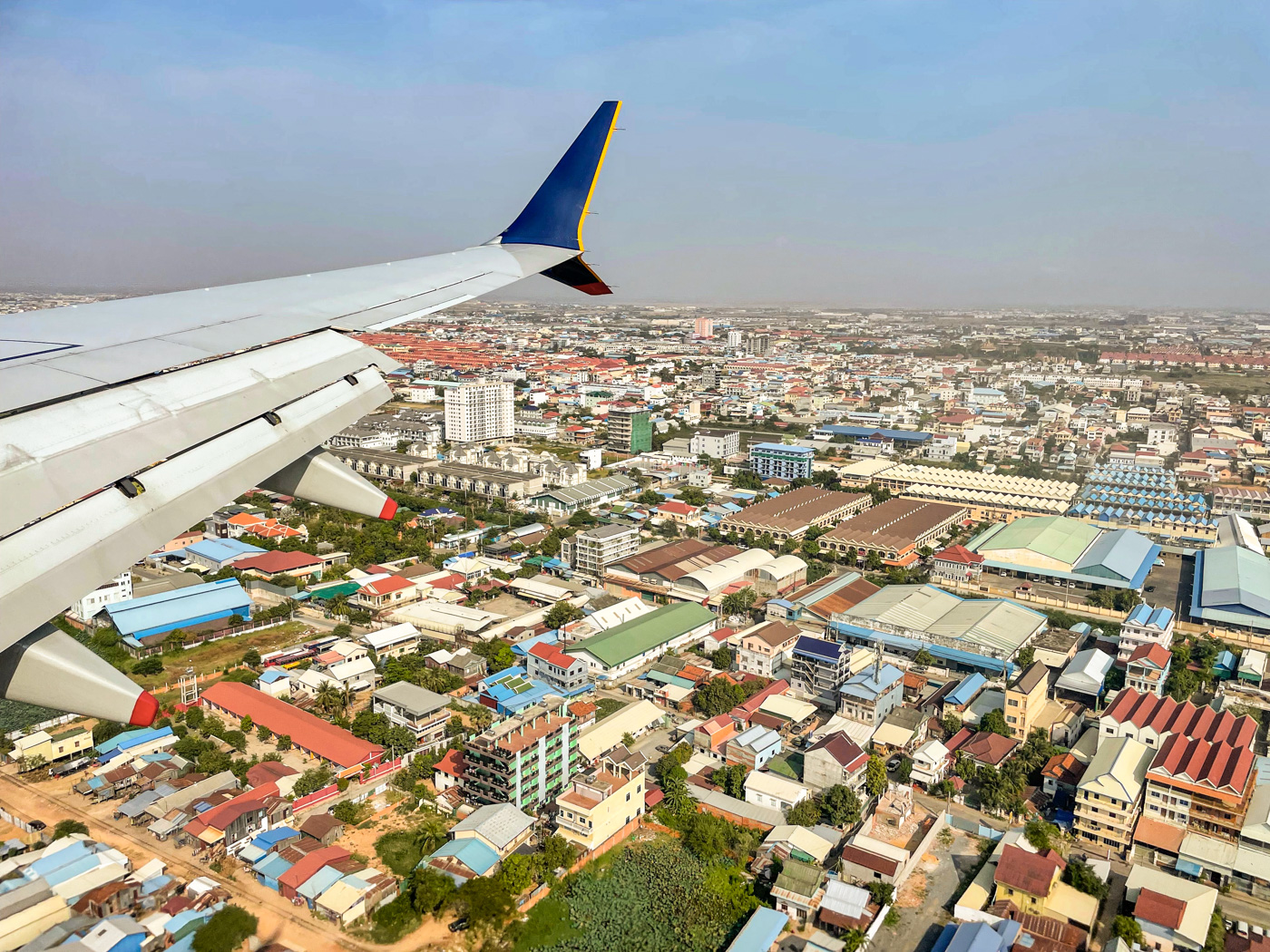
I’ll confess that I wasn’t sure I wanted to go to Phnom Penh’s Killing Fields and Genocide Museum.
Visiting sounded like a challenging, confronting experience, and the prospect of learning about such atrocities left me feeling unsettled.
But travel isn’t always sunshine and rainbows. In order to understand Cambodia beyond its fun-filled attractions, you must first expose yourself to the country’s tragic history. It’s such an important visit.
I suggest making these the very first activities you undertake in Phnom Penh. Doing so will provide valuable context for the rest of your time in the city, helping you recognise its transformation and strength of its people.
But first, breakfast. I always stay at my favourite property in town: Aquarius Hotel in Phnom Penh. I have a full review of the property at the end of this itinerary — and our first stop is just a 10-minute walk from there.
Head to Sophath for Breakfast Noodles
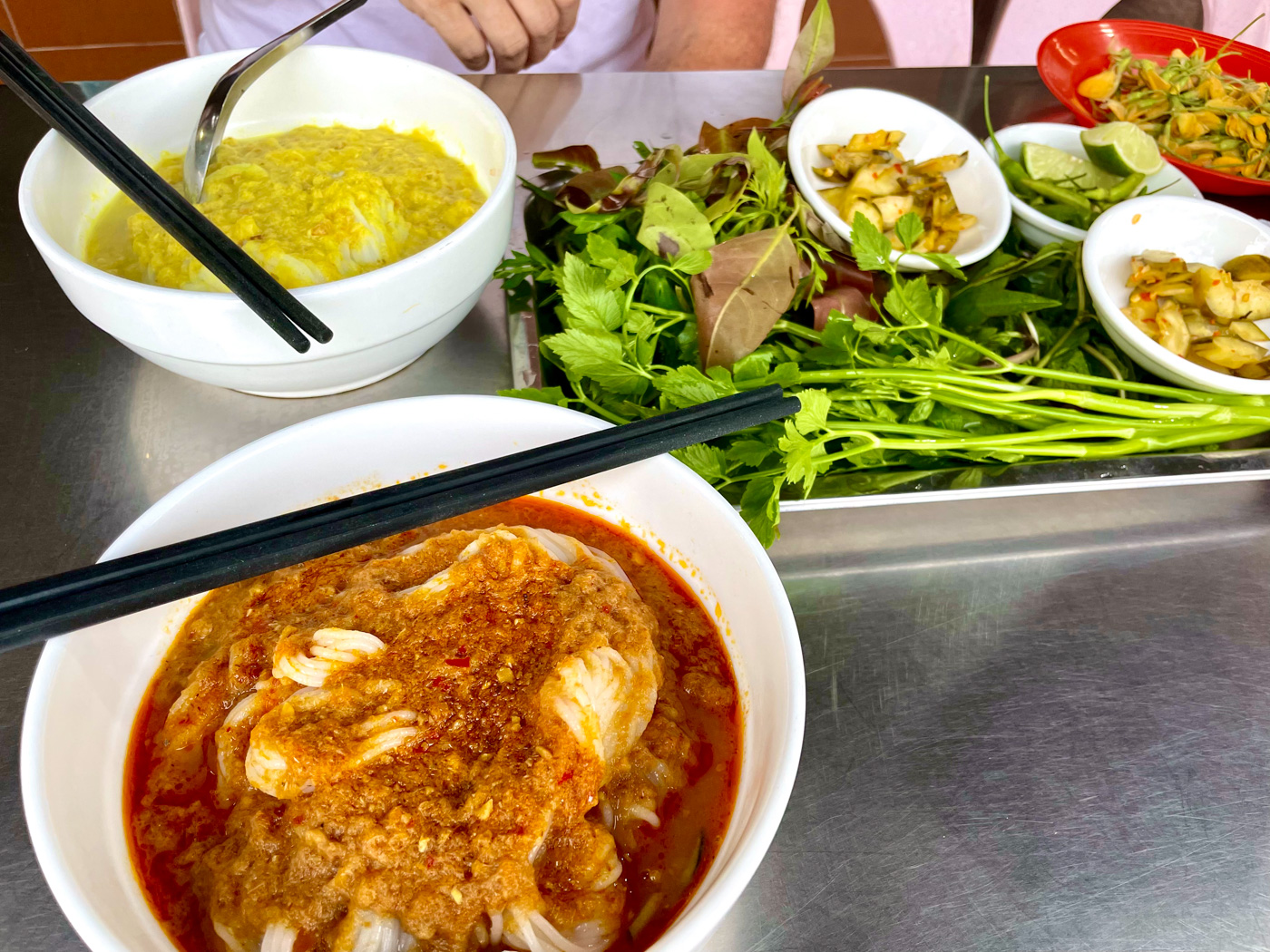
Forget eggs, toast, cereal, or bacon; in Phnom Penh, you should be eating noodles for breakfast.
My absolute favourite spot for num banh chok is Sophath. This unassuming restaurant opens early, at 7 a.m., and closes at 8 p.m., so you don’t technically have to go there for breakfast. In my opinion, it makes for a particularly local way to start your day, though, and isn’t that why you travelled to Cambodia?
The early start is an added bonus, too, as you’ll be looking to head off to the Killing Fields at just after 8 a.m.
English isn’t spoken by the staff at Sophath, but don’t let that put you off visiting. Instead you’ll be greeted by two vast steaming vats and invited to pick the one you want. Dave and I went for one of each — with little idea of the differences or what was in them — but both turned out to be amazing. If I had to choose just one to recommend, it would be the green-coloured rather than the red, but if you’re there as a party of two or more, it’s worth sampling some of both.
So what even is num banh chok? Well, it’s a typical breakfast dish in Cambodia and one of its most beloved. It’s all about the noodles here; they’re handmade daily and gently fermented, giving them such a light, fresh texture and taste. Fill the bowl with a coconut-based fish curry that’s packed full of tons of spices and you’ve got an interesting, flavourful breakfast. On the side, you’ll. have a selection of fresh herbs, edible flowers, and other, less identifiable leaves — add them all to your bowl; they’re fantastic!
We paid less than $2 for each of our soups and rated it as one of the best meals in the city.
With your stomach now full, it’s time to take a deep breath, and prepare yourself for the first activity of the day.
Pay Your Respects at the Killing Fields

In case you’re not up on your history, let me give you a brief introduction to the Khmer Rouge, who ruled Cambodia between 1975 and 1979. During their regime, they implemented a brutal social experiment aimed at creating a classless, farming-based society. And that vision? It led to one of the deadliest genocides in modern history.
The Khmer Rouge forcibly evacuated people from cities and towns, abolished currency, religion, and personal property, and forced agricultural labour upon its the population. Intellectuals, professionals, doctors, and anyone perceived as a threat were murdered.
Nearly a quarter of Cambodia’s population died due to execution, forced labour, or starvation beneath their rule.
The Killing Fields is where many of these senseless murders took place. It’s located 17 kilometres, or 11 miles, outside of the city. I recommend hiring a guide ($19) to take you to both here and the Genocide Museum in one somber morning. You can either book online using that link, or hail down a tuk-tuk driver in the streets to take you there; you’ll pay roughly the same for either option.
As you can imagine, it makes for quite a difficult experience, but it’s only through learning about these atrocities that we can ensure they never happen again.
When you arrive at the Killing Fields, you’ll need to pay a $6 entrance fee, then you’ll be handed a headset.
You’ll now embark on a self-guided experience through the fields, stepping over recently-emerged bones and tattered clothing. Yes, really. Every single wet season, even in 2026, new bones emerge from the soil at the Killing Fields.
The audio guide is genuinely excellent. It’s clear, interesting, and packed with firsthand stories from people who lived through the genocide. I was blown away by how powerful it was and still get chills thinking about certain moments; in particular, listening to the same music that used to be blasted out over the fields to cover up the sounds of executions.
You’ll come to discover that this Killing Field is just one of many around the country. In fact, more than 20,000 mass graves have been discovered across Cambodia, with an estimated 1.7 million people buried within them. It’s chilling and devastating, but visiting will help you understand Cambodia’s past while also acknowledging its resilience and growth since.
You can expect to spend two to three hours at the Killing Fields, then your driver or guide will take you to Toul Sleng: the Genocide Museum. It’s a 20 minute drive away.
Venture Over to the Tuol Sleng Genocide Museum

The horrors committed by the Khmer Rouge weren’t limited to the Killing Fields. That’s why it’s just as important to spend a couple of hours at Tuol Sleng Genocide Museum.
It doesn’t really matter which order you visit the two sites, but I usually recommend heading to the Killing Fields first, as the Genocide Museum is located in the city, so you’ll finish up in the heart of Phnom Penh.
Horrifyingly, Tuol Sleng was originally home to a high school, with its open courtyard once filled with happy, innocent children. Little did anybody know it would soon be transformed into a detention centre, where tens of thousands of Cambodians were interrogated, tortured, and killed. The prisoners here included teachers, doctors, lawyers, and even Khmer Rouge members who had disobeyed orders. The conditions were awful and torture methods brutal.
The museum pulls no punches, and neither should it, with the prison remaining much the same as it was during the height of the atrocities. It was within this building that over 17,000 people were locked up, with only a handful making it out alive. Some of those that did make it out now work at the museum, including one person who was rescued at the 11th hour after Vietnam invaded.
As you explore the museum and prison, you’ll walk by cells fitted with iron beds where prisoners were executed, their splatters of blood remaining on the surfaces to this day. There’s also a display of hundreds of portraits that puts faces to the genocide victims. It’s a heart wrenching experience that, alongside the Killing Fields, helps you understand the brutality of the Khmer Rouge.
As with the Killing Fields, you can expect to spend two hours here. Once you’ve finished up, it’ll be lunchtime, so it’s time to sit down, have a meal, and attempt to process everything you’ve learned. I recommend taking the 15-minute stroll over to Backyard Cafe on Street 446, in the Tom Pong neighbourhood.
Have Lunch at Backyard Cafe
I mentioned how Phnom Penh has transformed in recent decades, so prepare to start feeling something akin to culture shock. After learning about so many horrifying events in the morning, it can feel jarring to leave the confines of the Genocide Museum and enter the bright vibes of a fun, modern city.
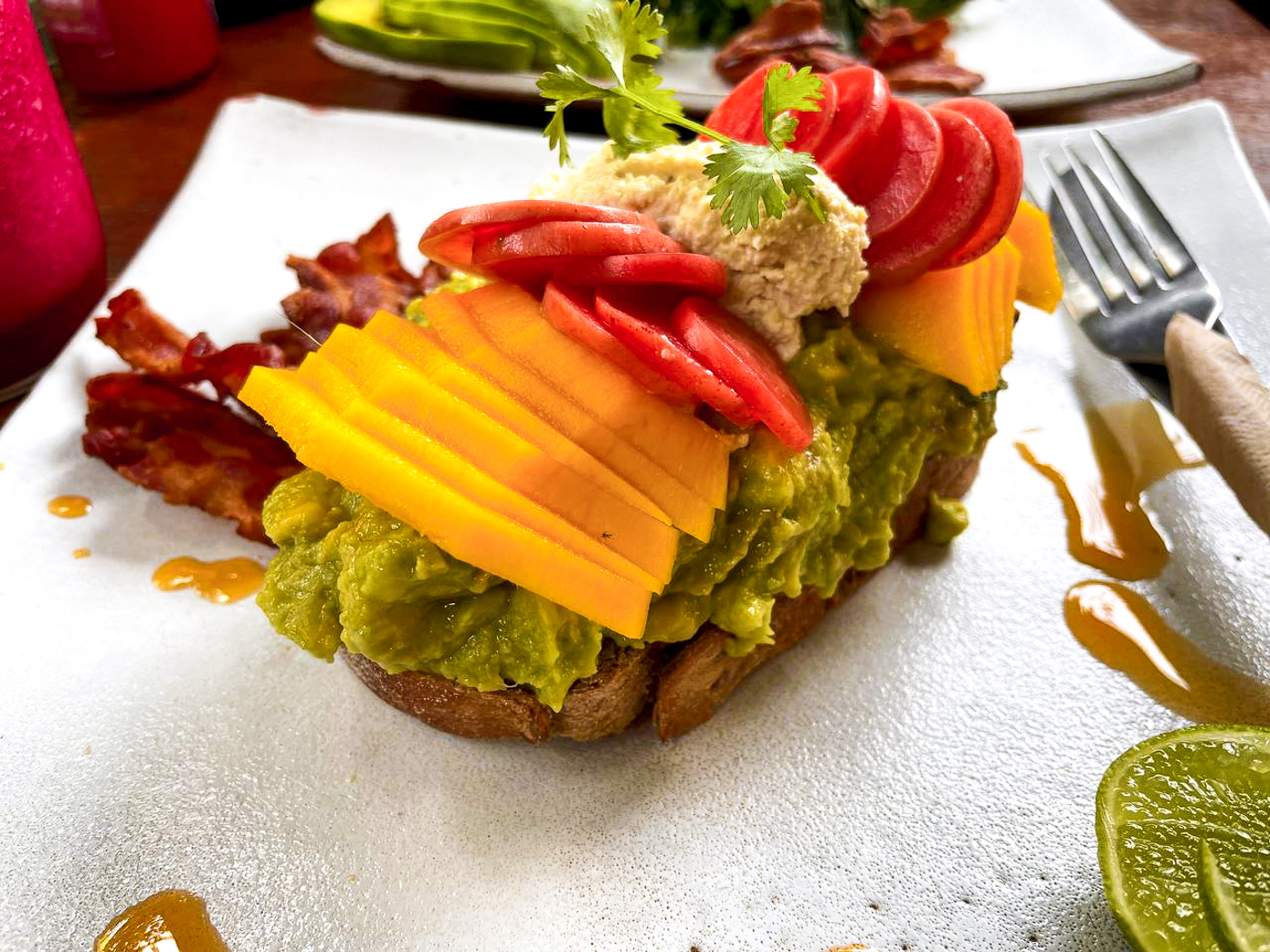
One of my favourite spots around Toul Tom Poung is Backyard Cafe, a health-focused eatery that wouldn’t be out of place amongst the brunchy restaurants of Australia. Relatedly, my favourite dish on the menu is the avocado mango toast; smashed avocado topped with mango, pickled radish, coriander, chilli, and lime.
(I know — I thought mango and avocado was a bit of a weird combination, but it works so well!)
They’ve got fresh fruit smoothies and all-day brunch dishes, along with salads, sandwiches, power bowls, and tons of healthy desserts. This is Phnom Penh! A thriving, modern city, with excellent brunches and fancy lattes. It’s come a long way.
When you’ve finished your meal, I recommend spending more time in the area to explore more of the hipster side of Phnom Penh. Here’s where I recommend checking out:
Dive Deeper into Toul Tom Poung

Toul Tom Poung is one of Phnom Penh’s coolest neighbourhoods. This is where you’ll encounter vegan brunches, oat flat whites, craft beers, boutique stores, and a surplus of digital nomads. It’s a great place to spend an hour or two.
Toul Tom Poung is a classic rags to gentrification hipster story witnessed in cities throughout the world, but this district has its own Cambodian twist on it all.
Head to Penh Lenh to pick up some beautiful jewellery made by local artisans (including welded bracelets!). La Plantation Shop & Museum is jam-packed with high-quality Khmer spices, teas, and sauces (their Kampot pepper makes for great souvenirs!) while Be Eco Sustainable Shop is home to high-quality, ethically-made Cambodian handcrafts, from jewellery to clothing to dish cloths to toiletries to trinkets.
If you’re keen to pick up some gifts for friends and family from Cambodia, this neighbourhood has tons of locally-produced items to peruse, and I always find myself picking up a few items whenever I’m in town.
If you want to further your shopping experience, there’s only one place to head next. Fortunately, it’s just a few minutes away.
Hunt for Bargains at the Russian Market

The Russian Market, originally known as Psar Toul Tom Pong, gets its name from the large number of Russian expats who would peruse the stalls in the 1980s. Don’t expect cheap vodka and Soviet-themed accessories here, though, as this busy spot is still very much Cambodian. It’s a popular part of the city, filled with tourists and locals alike.
Spots like these are often described as having everything but the kitchen sink, but this doesn’t quite hold true for the Russian Market. It actually has a kitchen sink! Even if you don’t have anything you need to buy, it’s still worth taking a walk around the place as a cultural experience.
As you can gather, you can find anything you might need here. There’s clothing, shoes, and bags, along with jewellery and souvenirs, statues, magnets, cushions, artwork, plus plenty of local handicrafts. I bought a ton of bracelets at the market on my first visit to Phnom Penh. On later trip, I picked up a fridge magnet for my eventual home and a silk scarf for my mum.
I’ll confess that the market isn’t all amazing. As with any major market in any major city, there’s still enough tacky plastic items, counterfeit clothing, and Chinese-made trinkets to make you cringe, but if you look hard enough, you’ll be able uncover some gems. And hey, if you’re looking for to replace your travel wardrobe, you can’t go wrong with a couple of $2 t-shirts.
Dave visited while we were last in town to get a hole in his shorts repaired; total cost: $1!
As for me? I’m so happy with the bag I bought from the Russian Market — pictured above — and I get compliments every time I leave the house with it: it’s so unusual-looking! Of course, I then become that annoying person who gets asked where something is from and unhelpfully answers, “Cambodia!”
When you’ve finished exploring the market, get in a tuk-tuk and ask them to take you to Sisowath Quay. It takes 20 minutes to drive there.
Wander the Relaxing Waterfront

One of my favourite places to hang out in Phnom Penh is Sisowath Quay. There’s always something going on over there. And as somebody who has an inexplicable passion for all things flag, I can’t deny enjoying walking beside the water and naming the country each one belongs to. No, you’re neurodivergent.
At Sisowath Quay, locals and travellers unite to enjoy a buzzy, busy waterfront. In what is already a bustling city, this stretch of pavement feels like the most happening part of town.
Throughout the day, you’ll spot locals strolling up and down the boardwalk with friends, families, and pets. Interspersed between them, you’ll encounter vendors selling everything from trinkets and handcrafted goods to street eats and cold drinks. You’ll find plenty of green space, shady trees, and park benches, too, so have plenty of opportunity in which to sit and enjoy your treats.
The waterfront is a great place to come for a afternoon stroll, cold drink in hand, but it’s just before sunset when things really get going. The nearby bars and restaurants light up and fill with patrons, aerobics classes take advantage of the cooler weather, and kids get football games kicked off. It’s a fantastic place for people-watching and I highly recommend spending some time soaking it all in.
When the afternoon heat gets to be too much, there’s only one activity worth considering. Fortunately, Phnom Penh has a surplus of them.
Cool Off in a Rooftop Swimming Pool
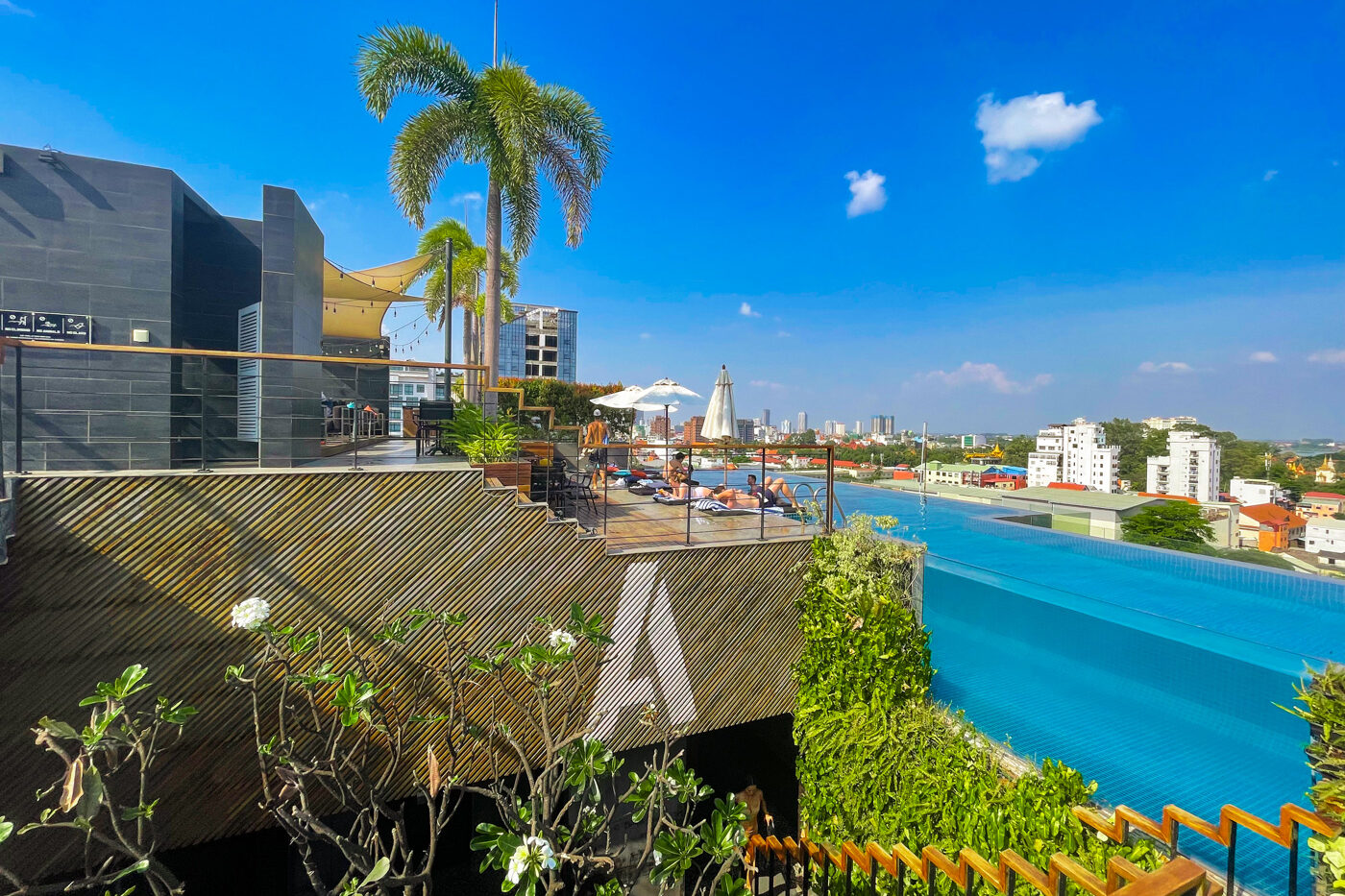
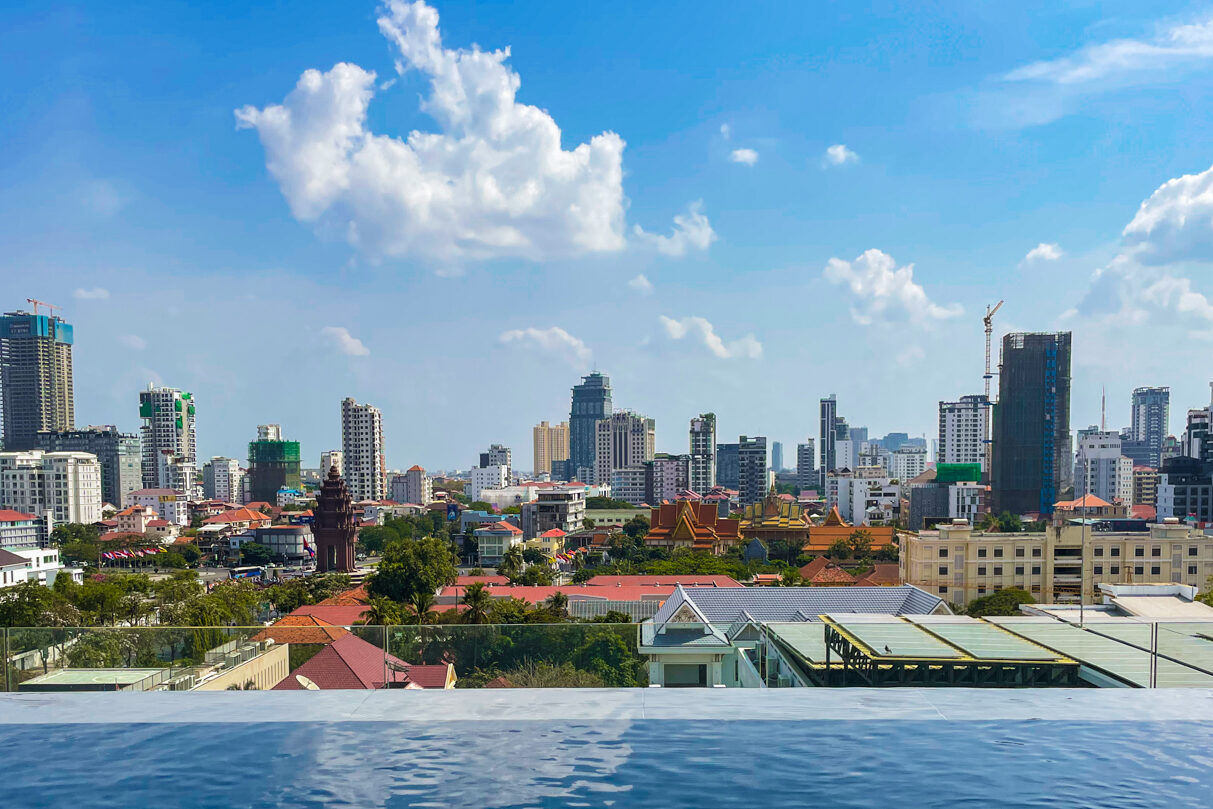
For some reason, Phnom Penh has become the home of the aesthetic rooftop swimming pool; there’s so many of them to choose from. And in a city as hot and sweaty as this, you’re going to be very grateful for their existence.
I mentioned above that I always stay at Aquarius Hotel whenever I find myself in Phnom Penh, and that’s primarily because their swimming pool is next level. It costs $40 a night to stay at the property — and I do think it’s worth it — but if you’re staying elsewhere, never fear. If you visit Aquarius and spend $12 on food or drinks in the restaurant, they’ll give you free access to the pool for the day!
This set-up is pretty common in Phnom Penh, so there’s plenty of spots where you can slip in to cool off if your accommodation doesn’t come with a pool. Patio Hotel and Penh House both have similar-style rooftop pools and charge $10 per person for a day pass, but I prefer the pool at Aquarius.
Once you’ve sufficiently cooled off and had a shower, it’s time to get ready for your first evening in Phnom Penh. Aim to head back over to Sisowath Quay (a 15-minute walk from Aquarius Hotel) by around 4:40-5:00 p.m. to begin your leisurely stroll over to Juniper Gin Bar.
Hit Up One of the City’s Rooftop Bars for Sunset

Speaking of sunset, one of my favourite things to do in Phnom Penh is hunt down a rooftop cocktail bar from which to watch it. Juniper Gin Bar is one of my favourite spots in the city and for good reason: their cocktails are both excellent and inexpensive.
I may have visited every evening while we were most recently in town.
Juniper’s happy hour cocktails, in particular, are great value for money: between 5 and 7 p.m., they’re priced at just $3.50 each! There’s seven different gin and tonics on the menu, too (choose the Mekong Dry for a local twist).
Some of my stand-out options included the Watermelon Felon (gin, lemongrass and watermelon syrup, lime, and fresh mint), Summertime Sally (gin, elderflower liqueur, raspberry syrup, jasmine flower, and lime), and French Heist (vodka, blackberry liqueur, orange bitters, and lime) — yes, I do tend to come here every single night while I’m in town.
The staff here are lovely, the drinks are excellent and good value for money (even non-Happy Hour drinks are priced at around $5 or $6), and the views are impressive. There’s no better place in Phnom Penh to sit and watch the sky turn orange.
What’s next on the itinerary? Heading to a Phnom Penh institution.
Dine on Homemade Noodles at David’s Restaurant
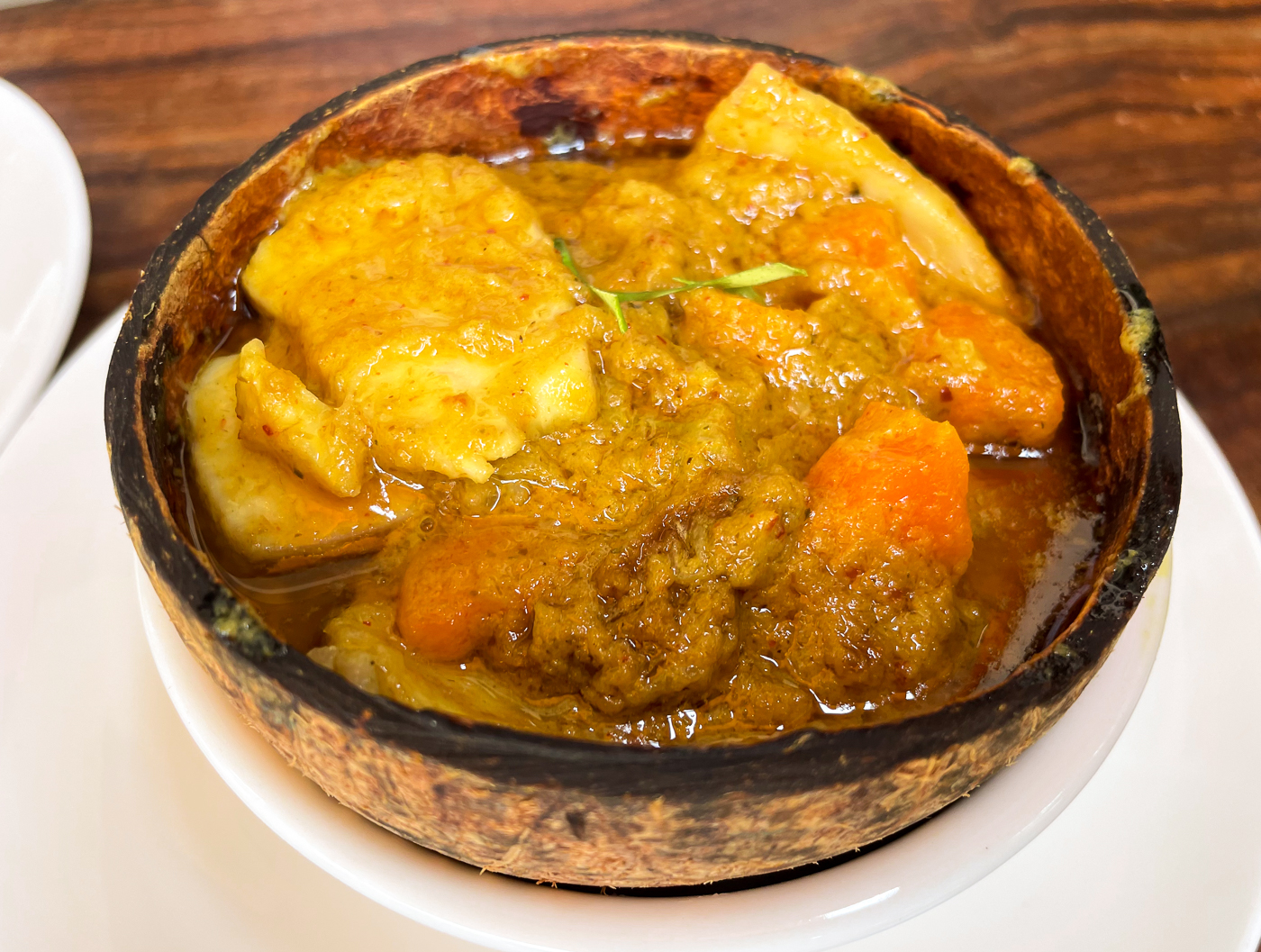
David’s Homemade Noodle Restaurant is one of my favourite eateries in town, so you won’t want to miss out while you’re here. It’s just a nine-minute walk from Juniper Gin Bar.
And the food is so good. I decided to go for the fish amok while Dave opted for the Khmer curry with duck; of course we also ordered plenty of dumplings to share as a starter! As the name implies, all of their noodles and dumplings are made fresh everyday, which really adds to the quality of the dishes.
If you haven’t had Khmer amok before, I highly recommend sampling it here. It’s one of the most well-known and well-loved dishes of Cambodia and the curry is packed full of flavour. Think: coconut milk, lemongrass, kaffir lime, turmeric, galangal, shallots, garlic, chillies, shrimp paste, all mixed up together!
Once you’ve finished, it’ll time to head back to your hotel and get ready for day two in Phnom Penh. We’re going to be packing just as much in tomorrow, so you’ll want to get plenty of rest!
Day Two: Impressive Architecture and Plenty of History
If day one was all about the heavy history, then day two is going to be about reminding yourself that this country has been shaped by far more than its Khmer Rouge years. It’s a slower-paced day, less emotionally intense, and just as fascinating.
You’ll spend most of the day wandering from impressive building to another, learning about Cambodia’s pre-colonial kings and post-colonial artists. Then, once you’ve had your fill of culture (and sweat), you’ll round off the day with dinner at my favourite restaurants before drifting down the Mekong as the sun sets in the distance.
Hit Up the National Museum of Cambodia

Now, I’m no museum fanatic.
And yet, I highly recommend spending an hour or two of your morning at the National Museum of Cambodia. I was unexpectedly impressed by all of the jewels it has to offer visitors.
Once inside the terracotta-coloured building, you’ll make your way past 2,000 Khmer artefacts, dating from the 4th Century to the modern era. This is one of the largest collections of Cambodian relics in the world — they have another 14,000 lurking in the basement! — and I found it fascinating to see them up-close.
Yes, you’ll see plenty of examples of these treasures while you’re at Angkor Wat, but here, you can get within inches of the impressive sculptures, and most aren’t behind glass, either. Most impressive is the bronze statue of Vishnu from the 11th century; a whopping two-metres in length.
As you pass from room to room, you’ll encounter hundreds of examples of Khmer creativity, including ancient sculptures and statues, pottery, ceramics, and tools, plus ethnographic art, traditional transportation methods, and even the world’s longest hand-woven scarf. Most of the items have a short description in English, but don’t expect to learn a huge amount from these — instead, consider renting an audio guide for $5 or a human one for $10.
If you’re not that big on museums, I still recommend heading to the grounds to admire the rust-coloured architecture: you can walk around the exterior of the building without having to pay an entrance fee. Amazingly, we ran into a couple of workers in the garden who were carving similar statues to the ones we’d seen inside the museum.
There’s also a cafe on-site that we stopped at for a fresh coconut before heading back out onto the busy streets of Phnom Penh.
Entrance to the museum comes in at $10 per person, which is relatively expensive for Cambodia. If you’re keen to learn more about the country’s history, though — and especially through its ancient sculptures — I think you’ll find the entrance fee worth it.
Explore the Royal Palace of Cambodia

It’s hard to avoid the Royal Palace. This grandiose residence has been the official home of Cambodia’s royal family since the mid-19th century and its central location means you’ll find yourself passing by on a near-daily basis.
Is it worth the $10 entrance fee? To me, it was. This complex has so much to see, from its landscaped gardens to its opulent Throne Hall. One area you can’t access is the western reaches of the palace: that’s where the King’s residence, the Khemarin, is found, as well as Villa Kantha Bopha, where foreign guests stay when they visit. If the blue flag is flying, it means the king is home!
You can expect it to take around an hour to see everything, and if you haven’t yet encountered a lot of Khmer architecture across Cambodia, you’ll find the buildings particularly impressive. I was most wowed by the Throne Hall, and one of the most unusual structures, I thought, was the entirely-iron Napoleon III Pavilion, which was gifted to Cambodia by France in the 1800s.
Oh, and there’s one more structure I haven’t yet mentioned.

Your $10 entrance fee also gives you access to the Silver Pagoda. For many people, this structure is what makes the entire cost worth it. The elaborate temple gets its name from its floor: it’s blanketed in over 5,000 silver tiles, weighing over six tons in total! While most are covered to protect them from damage, you can catch a sneak peek of them at the entrance.
The temple’s main hall houses some beautiful artwork, but the most impressive parts of the interior are the Emerald Buddha, a small but significant statue in the centre of the room, and a human-sized, solid gold Maitreya Buddha (the successor to Buddha) that’s encrusted with over 20,000 diamonds!
Several things to keep in mind as you plan your visit to the Royal Palace: you need to cover up, which includes your knees, back, shoulders, and elbows. If you don’t, you can purchase clothing at the entrance for $3. Additionally, the opening times are a bit odd here: 8 – 11 a.m. then 2 – 5 p.m., so aim to get here between 9 and 10 a.m. It gets busiest on a Sunday, so try to time your explorations for an alternative day of the week.
Summit Wat Phnom

Phnom Penh is a decidedly flat city, making it a pleasure to walk around — if you don’t mind the heat, that is.
But there’s one part of town that takes you higher, and that’s Phnom Penh. Huh? No, I’m not talking about the city, but rather the hill that the city was named after. To be fair, it’s more of a knoll than a hill, but that mighty elevation change of, um, 46 metres, or 150 feet, still helps it stand out against the overall city skyline.
And atop the hill, you’ll find Wat Phnom Daun Penh, a rather impressive temple that dates back to the 1300s — it’s one of the oldest, and most important, in the city. You’ll pay just $1 to go inside, so there’s no reason to skip out on the experience, and it’s definitely worth the money. The painted ceilings inside are particularly impressive, as are the numerous Buddha statues, but I most enjoyed soaking up the peaceful vibes as I wandered around the exterior.
If you like your wildlife, watch out for Giant hornbills while you’re here; these sizeable birds grow to over a metre in length, with a wingspan of up to almost two metres! There’s normally a dozen or so hanging around the complex to take photos of, and they’re a big draw for the bird enthusiasts in town. Even if you’re not a fan of birds, keep an eye out for them: they’re said to bring good fortune to anyone they fly over.
A Taste of Fine Dining With Dinner at Malis

I couldn’t stop laughing.
It was the most contradictory of meal options. After having breakfast at Sophath the day before, Dave and I decided to opt for dinner at Malis. And what is Malis?
Well, it might just be one of the highest-end restaurants in the city. But don’t let that put you off: the dishes here are remarkably good value for money.
As much as I adore the street food and cheap eats of Cambodia, I also recommending heading out to experience something even more interesting. Because who says that this country can’t develop its own fine dining scene?
Malis serves up some of the best food in Phnom Penh, taking you by the hand and introducing you to their special, experimental takes on Khmer food. You’ll encounter everything from baked goby river fish in a salt crust to deep-fried crabs from Kep; Mekong lobster to chicken curry steamed in a lotus leaf.
The biggest stand-out dish for me, however, was the Kampot pepper crème brûlée. I love me a crème brûlée and I couldn’t get enough of those sweet flavours combined with the spicy green peppercorns.
Dave and I splurged and opted for the seven-course tasting menu (there are smaller tasting menu options, too), which comes in at $68 per person. Ours featured beef skewers with peppercorns and pickles, grilled squid and cucumber salad (pictured above), bamboo shoots and smoked fish, Kep flower crab fried rice, Saraman beef curry, Morning Glory, and the aforementioned Kampot pepper brûlée. We also ordered a baked goby as an extra because it looked so, um, interesting. That one’s in the photo below, along with the view from our table of the cosy exterior.


I do want to mention, too, that if you don’t opt for the tasting menu options, you can visit this excellent restaurant for far less.
As an example, the crab fried rice is priced at $18, fish amok is $11, Takeo pork is $14, and roasted Angkor-style chicken is $28. Yes, it’s pricey for Cambodia, but it’s also an interesting experience and not one that visitors may necessarily associate with the country.
If you’re celebrating a special occasion while you’re in Phnom Penh, this is a great place to do so.
And speaking of special occasions, there’s only one way to finish up your time in Phnom Penh:
See the City By Sunset River Cruise

I love the Mekong River.
This extensive stretch of chocolate-brown water has captivated me for years, whether I’ve been tackling its waters by slow boat in Laos or crossing its waterways by scooter in Vietnam. And then it was Cambodia’s turn.
There’s an abundance of options for getting out on the water in this city. From Sisowath Quay, you’ll have no shortage of private boats ready to take you on a tour, but be sure to have your haggling skills ready (we managed to negotiate them down to $5, but anywhere between $5 and $8 is likely a good deal).
You can also book a cruise in advance online if that’s more your jam. A cheap and cheerful cruise costs $9, while a ride with unlimited beer comes in at $8.
It’s in Phnom Penh where the mighty Mekong meets the tremendous (lol) Tonle Sap and a sunset river cruise will enable you to traverse both of these iconic waterways. Along the way, you’ll get to see the sights of the city across the full spectrum of grandeur: from the Royal Palace to humble floating villages.
This really was a highlight of my time in the city, and I always recommend it to friends as the best way to spend your final night in town.
Where to Stay in Phnom Penh

Aquarius Hotel ($50 a night)
My favourite Phnom Penh hotel!
Aquarius Hotel is my favourite property in the city and now that I’ve discovered it, I refuse to even consider staying anywhere else.
As you can see from my photo, it has the most incredible rooftop swimming pool, with sun loungers slotted around the water, and a spacious, airy bar with happy hour cocktails (buy 2, get 1 free) that we took advantage of every evening. The staff are wonderful, the rooms are clean and modern, and it’s in a fantastic location, within walking distance of all the main attractions. There’s even a spa included in the price.
But really: it’s all about that rooftop infinity pool!
And That Was Phnom Penh!
I hope you fall just as much in love with this city as I did! :-)
Make Never Ending Footsteps a preferred source in Google so you can see more of my travel guides.


Ahh this is super helpful, thank you. I’ve been feeling kind of overwhelmed trying to plan this and this makes it feel doable. Quick question, was it weird doing the Killing Fields and S-21 in the same day? Like… too heavy? I’m not sure I can handle both back to back.
Hi Erica. I won’t lie: visiting both at once does make for an intense day, but I still think it makes most sense to combine the two. It helps give you a fuller understanding of what happened to see them one after another, and it also means you’ll have one heavy day of the trip, rather than two. I think I got more out of the experience by pairing them together.
Loved this – thank you! This makes Phnom Penh feel way less intimidating. Random question though – did you feel safe walking around at night? I’ve read mixed things and don’t know what to believe.
Hey Vicky! I actually felt very safe in Phnom Penh, even while walking at night and even as a woman. The main touristy area is always so busy with visitors and locals that there’s always dozens of people around. Like anywhere, keep your wits about you and stick to well-lit streets, but otherwise, I wouldn’t take any more precautions than you do at home.