I knew I’d never have another travel experience like it.
Another life experience.
I was in the Democratic Republic of the Congo and I’d just spent the past couple of days hiking with wild mountain gorillas and sleeping at the top of an active volcano. Both activities had been physically and emotionally demanding — and more than a little nerve-wracking, given where I was — and yet, they had been two of the best experiences I’d ever had. I couldn’t wipe the smile from my face.
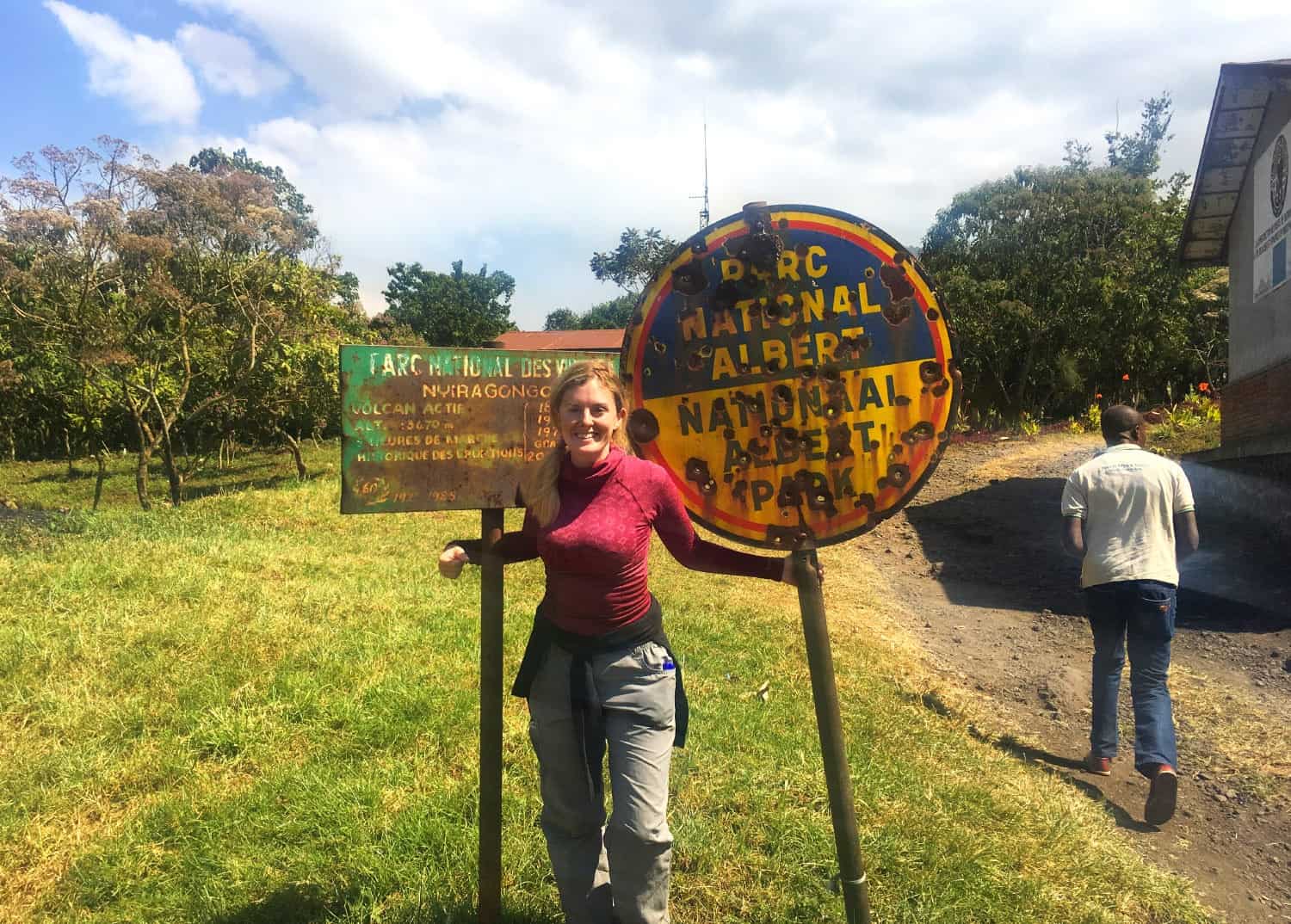
At the base of Mount Nyiragongo, I took my final photos of the bullet hole-ridden sign that marks the start of the climb; something that every visitor to Virunga National Park brings away as a souvenir.
I exchanged contact details with freshly made friends, and we promised to meet back up in the future to tackle Mount Cameroon, Mount Kenya, and Mount Kilimanjaro together. We had all caught the climbing-mountains-in-Africa bug and couldn’t wait to do it all over again.
Because while my friends were heading into Rwanda next, I wasn’t quite finished with the Congo.
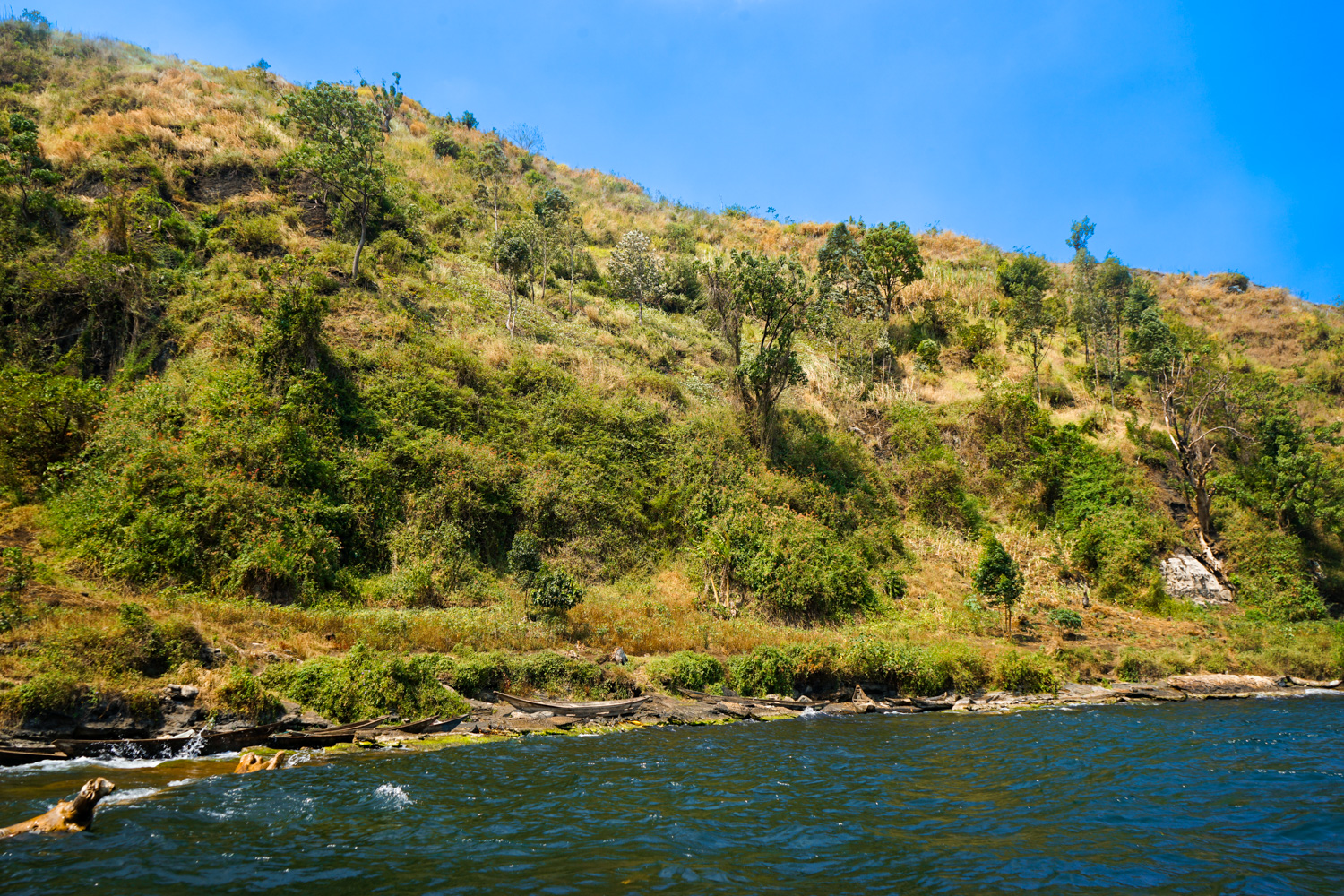
There had been around 30 of us camping at the top of Mount Nyiragongo the night before, but I was the only visitor to Virunga who was heading to my next destination. I won’t say that this fact left me feeling reassured, but it was too late to change my plans now.
With butterflies in my stomach, I clambered up into the jeep that was waiting for me, greeting my driver and waving at the two armed guards that would be accompanying me on this journey. I had yet to grow comfortable with the sight of AK-47s, despite having been surrounded by dozens of them over the past few days.
In order for tourists to safely visit Virunga National Park, visitors are assigned two armed guards for protection. It was a visceral reminder that no matter how safe I may have felt in this country, the reality was quite the opposite.
Three UN workers joined me in the vehicle, and we started making our way to the nearby city of Goma.
You likely won’t be surprised to learn that tourists are a rare occurrence in a destination as risky as the D.R.C., which is regularly named one of the ten most dangerous countries in the world.
I wasn’t surprised to discover that I’d predominantly been hiking Mount Nyiragongo with aid workers then; there are so many foreigners in Goma for this reason, and most of them got around to climbing the volcano eventually.
As if to prove my point, we parked outside a UN compound to let one of my fellow passengers out of the car.
“Oh, before I go,” she said, half out the jeep. “Do you want to exchange emails and send each other our photos of the volcano?”
I eagerly agreed, excited by the prospect of even more photos and videos of my magical experience. The more memories I could collect, the better.
“What’s your email?” she asked.
“It’s lauren at never ending footsteps dot com.”
She paused.
“Is Never Ending Footsteps the name of your NGO?”
I stifled a giggle, then confessed that the work I was doing here was a little less meaningful.
You know you’re travelling in the Congo when…
After she said her goodbyes, the remaining two passengers bombarded me with questions about what I do for a living. This tends to happen whenever people find out that I’m a travel blogger, but I’m always excited to share more details because I love what I do. Typically, I’m asked the same three questions:
Do you make money from that? (Yes).
How do you make money? (Advertising and affiliate commissions, mostly).
What’s your favourite country? (India, New Zealand, Thailand, or Mexico, depending on my mood).
After we’d dropped them off at their respective bases, I settled in for a quiet journey to the port.
My destination was Tchegera Island and I was venturing there alone. I’d first learned about this spot on Virunga National Park’s website, where it was pitched as a peaceful getaway in the middle of Lake Kivu. Wanting to see as much of the country as possible, in as safe a way as possible, I had added it to my itinerary without much of a second thought.
It was only now that I was all alone that I was wondering if I’d made the right decision. Why was nobody else heading here?
I watched the choppy waves on the lake as we wound our way back through Goma and out into its suburbs. UN camps lined with barbed wire sat alongside ramshackle houses with piles of black rocks outside; the latter a reminder of the recent eruption of Nyiragongo that had flooded the streets with lava.
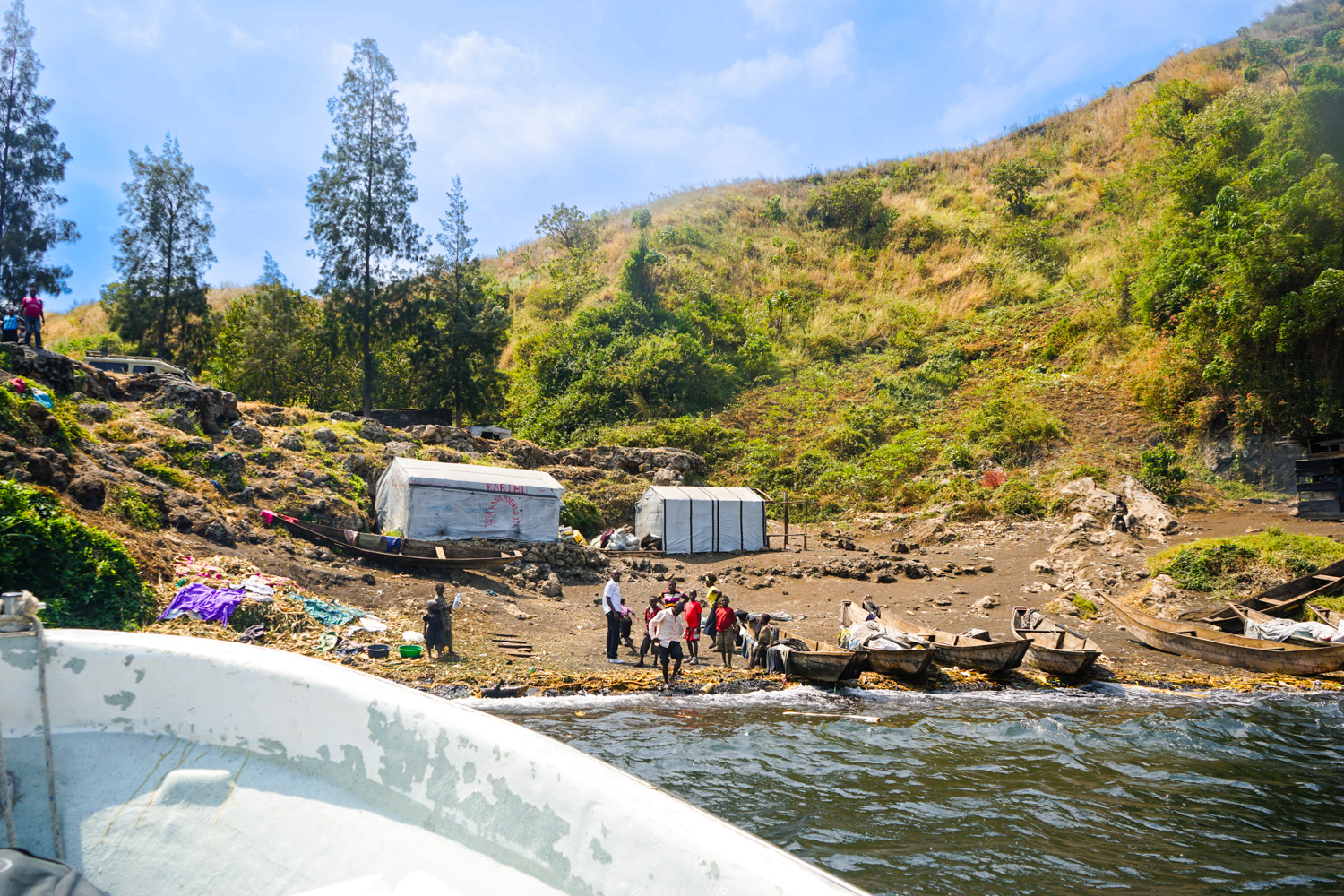
When we reached our destination, I snapped a photo of the small beach in front of me.

There were a handful of locals milling around on the dark sand, and half a dozen kids shrieked loudly as they played a game beside the water. A couple of men were fishing from the shore and I watched a woman wash her laundry in the lake.
The wind whipped around me as I jumped down from the jeep and followed my driver down the cliff to the beach. I was distinctly aware that the locals were staring at me when I reached the bottom.
“Mzungu! Mzungu!” the kids started chorusing.
In this part of the world, mzungu is the term that’s used for a white person. Sometimes it’s used offensively, sometimes it’s a term of endearment, and sometimes it’s just plain descriptive. In the D.R.C., more than anywhere else I’ve visited in Africa, it was shouted at me as soon as somebody spotted my pale skin.
I waved at the children as they came running across the beach to me.
One of them snatched my water bottle from my hand and skipped off with it, and I didn’t know how to respond, so I let them have it.
“It’s okay?” my driver asked me, watching the kid repeatedly throw the water bottle up in the air.
I nodded. “Yeah, of course.”
He pointed out across the lake to a tiny brown shape. “Boat.”
I watched it grow in size as the children ran circles around me, chanting mzungu! as I awkwardly smiled down at them in response. I wasn’t sure if they hated me, wanted to be my friend, or were just curious.
In a country where governments the world over advise against all but essential travel, foreigners, and especially tourists, are a rare sight.
The driver of the boat cut the engine when he was 20 metres from the shore and sat there in silence, watching me. “Um…”
I looked down.
Fresh off my Nyiragongo hike, I was still wearing hiking boots and long pants, which weren’t necessarily ideal items of clothing for wading through knee-deep waters of a lake.
I looked back up at the waves of the lake and tip-toed towards them, pondering how best to tackle this.
Before I could comprehend what was happening, I felt a pair of strong arms reach around my waist and hoist me into the air.
The kids started applauding and squealing.
I started laughing.
In a fit of impatience, my jeep driver had picked me up and thrown me over his shoulder in a fireman’s lift and was now carrying me to the boat.
Mzungu! Mzungu! the kids cried out, and I suspected this was the first time any of the locals on that beach had witnessed a scene like this one.
Seconds later, I was plopped in the boat, backpack still on my back.
“Goodbye.”
“Thank you so much! Goodbye!”
As the boat turned around and set its sights on Tchegera Island, I looked back to where I’d been. There my driver was, halfway up the hill to his jeep, and there everyone else was, on the beach and watching me leave. I couldn’t stop grinning as I replayed the fireman’s carry in my mind.
I focused my attention back towards the boat and what was now turning out to be a treacherous journey.
Our humble boat felt ill-equipped to handle the whitecaps of the lake. Instead of cutting through the waves, it bounced over the top of them, catching air, then slamming back down with enough force to rattle my teeth. I gripped the wooden bench below me, and tried to look relaxed, as though this was all part of the charm.
Behind me, the shoreline was already shrinking into a blur of green and brown, and I could no longer make out the people on the beach. Ahead of us, Tchegera looked impossibly small.
There was a greater than zero chance of me getting propelled overboard.
Another wave rose up in front of us, darker than the rest, and I felt the engine strain as we climbed it. For a moment there was nothing but sky. Then we dropped hard enough that cold water sprayed over the side, soaking my legs.
As I squinted out towards Tchegera Island, I was suddenly very aware that I hadn’t asked how long this crossing was supposed to take.
I glanced back at the boatman, searching his face for some sign that this was unusual. He looked entirely unbothered, which was either reassuring or deeply concerning.
The man who had taken me into his arms an hour ago had done so to prevent me from getting wet, but now I was drenched either way. The water was so choppy that there was no direction we could take that wouldn’t send waves sloshing into the boat.
We hit one last wave at an angle and the boat lurched sideways, sending another splash across the floorboards. I let out a laugh that sounded far more confident than I felt. In the back of my mind, I was making contingency plans for what to do if we started to sink.
And then, just like that, everything changed.
As we rounded the island’s edge, the water flattened. The violent rise and fall softened into a gentle bob. The engine eased back to a low hum, and for the first time since leaving shore, I unclenched my hands and jaw.
We glided into a small, sheltered bay where the lake was suddenly as smooth as glass. The boat scraped against the sand and my driver cut the engine, leaving behind a silence that felt oddly jarring.
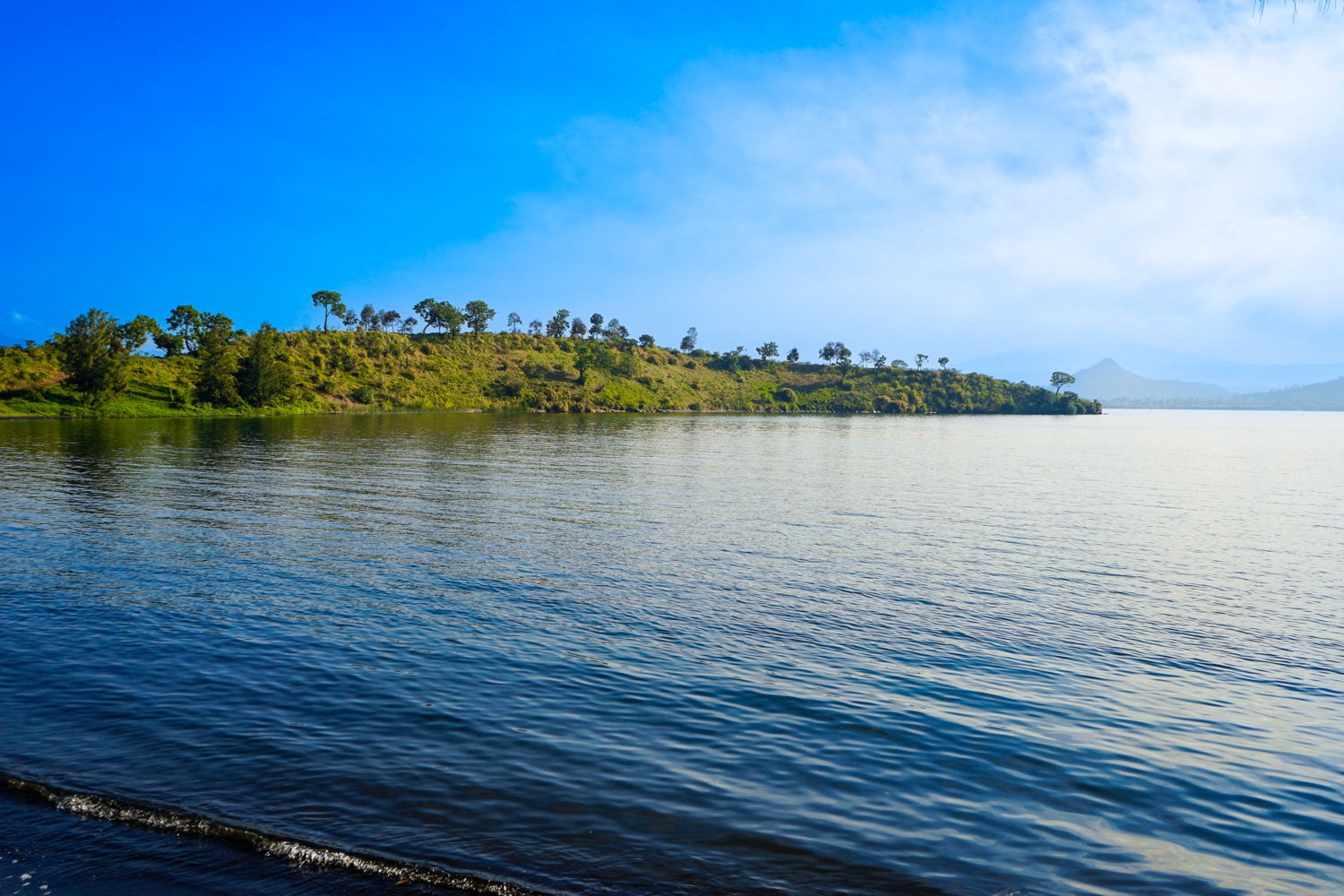
I stood carefully, legs still shaky from the constant jolting, and stepped out onto dry land. Behind me, the driver restarted his engine and began to reverse back out onto the lake.
I shouted a thank you and waved him off, standing there until the engine noise faded and was replaced by the twittering of birds. Then, I looked around and felt a weight lift.
Tchegera Island.
It was so good to be here.
When I checked in, I learned there was one other tent that would be in use that night — a couple were currently out kayaking on the lake — otherwise I’d have the entire island to myself. I hadn’t known it when I’d made my reservation, but Tchegera Island was going to be the perfect place to recover from the previous day’s adventure.
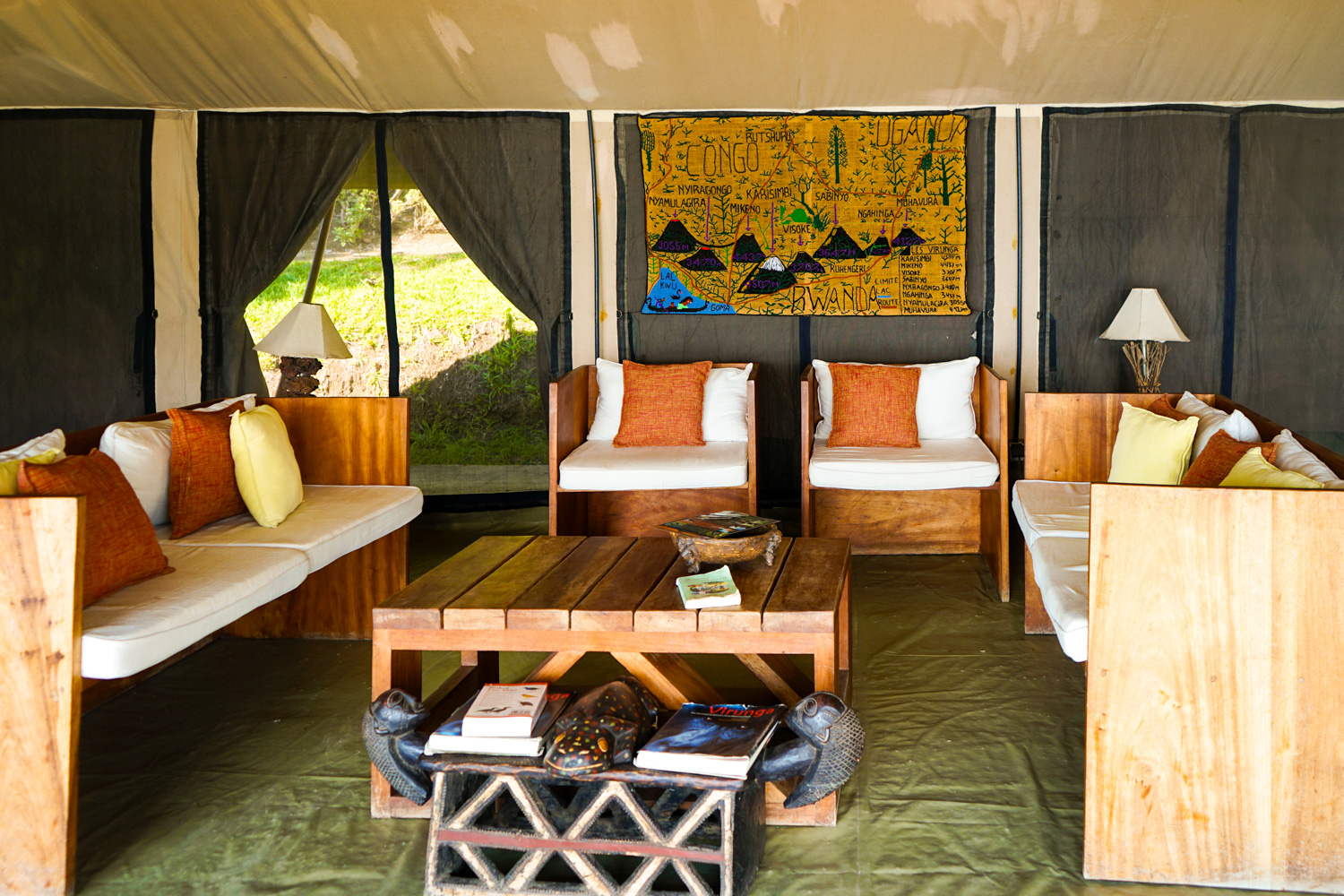
The staff of the lodge were warm and welcoming, and they took me over to my tent. It was surprisingly high-end, with a comfortable double bed and hot water shower that was powered by solar panels.
After they left, I dropped my backpack to my feet and groaned. I hadn’t slept more than a couple of hours at the summit of Mount Nyiragongo, both due to the altitude and the excitement of sleeping metres away from the largest lava lake in the world. I was exhausted.
Despite wanting nothing more than to collapse into my bed, I knew I would likely never have the opportunity to see Tchegera again. I stretched out my aching limbs then ventured back outside.
It was time to see what made this island so special.
There was a dirt track leading from my tent to a small hill, so I followed it up, committed to exploring every inch of this crescent moon-shaped island.
Tchegera’s unique shape comes from the fact that it’s the remains of a partially submerged volcanic caldera, so as I walked around the grassy track, I was actually strolling atop the rim of an extinct volcano. That was pretty cool.
What I hadn’t realised until stepping foot on this island was just how small it was. From the easternmost to westernmost points of the island, it was only around 500 metres (1,600 ft), and it was much the same from the northernmost to southernmost points.
On my nature trail, I was excited to scale a small hill that would help me put the island’s size and shape into perspective.
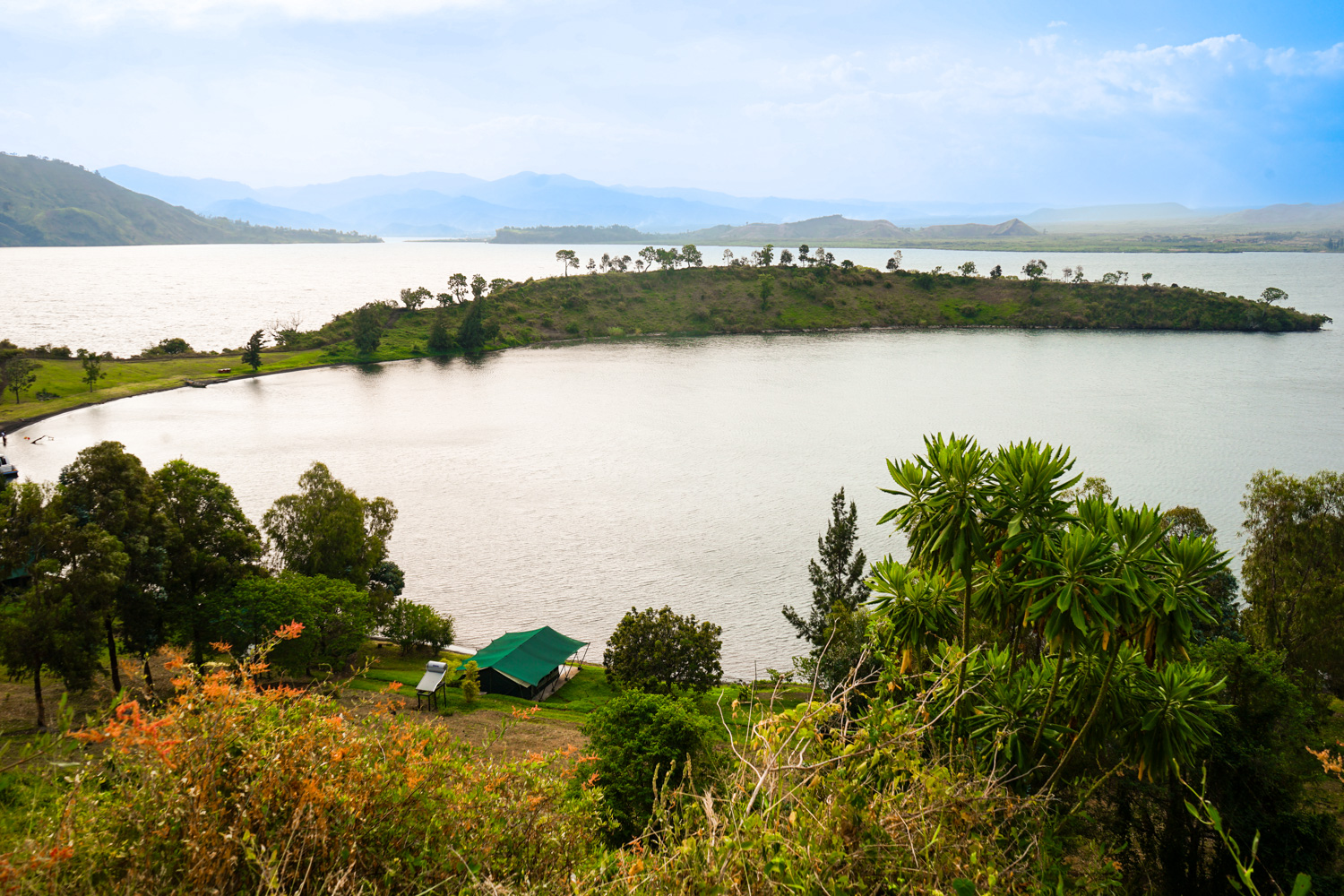
You’d struggle to spend more than half an hour walking from one end of the island to the other, unless you’re really into the wildlife that can be found here. Birders, in particular, are excited by Tchegera Island, as over 300 bird species have been spotted here.
The African pygmy kingfisher, red-chested sunbird, white-breasted cormorant, herons and warblers and waxbills can all be found here, and there are snakes on the island, too, including the venomous Eastern Forest Cobra.
The real star of the show, however, are the Blue Monkeys, which I was lucky enough to spot while I was sitting on the beach that afternoon. They live on the island, the staff told me, and they see the monkeys daily.
So how to fill your time on Tchegera, once you’ve covered the entire island on foot? There are plenty of water-based activities for guests to sign up for, like kayaking and stand-up paddleboarding. Given my dramatic arrival on the island, however, I didn’t want to take the risk of getting blown across the lake to somewhere I couldn’t get back from.
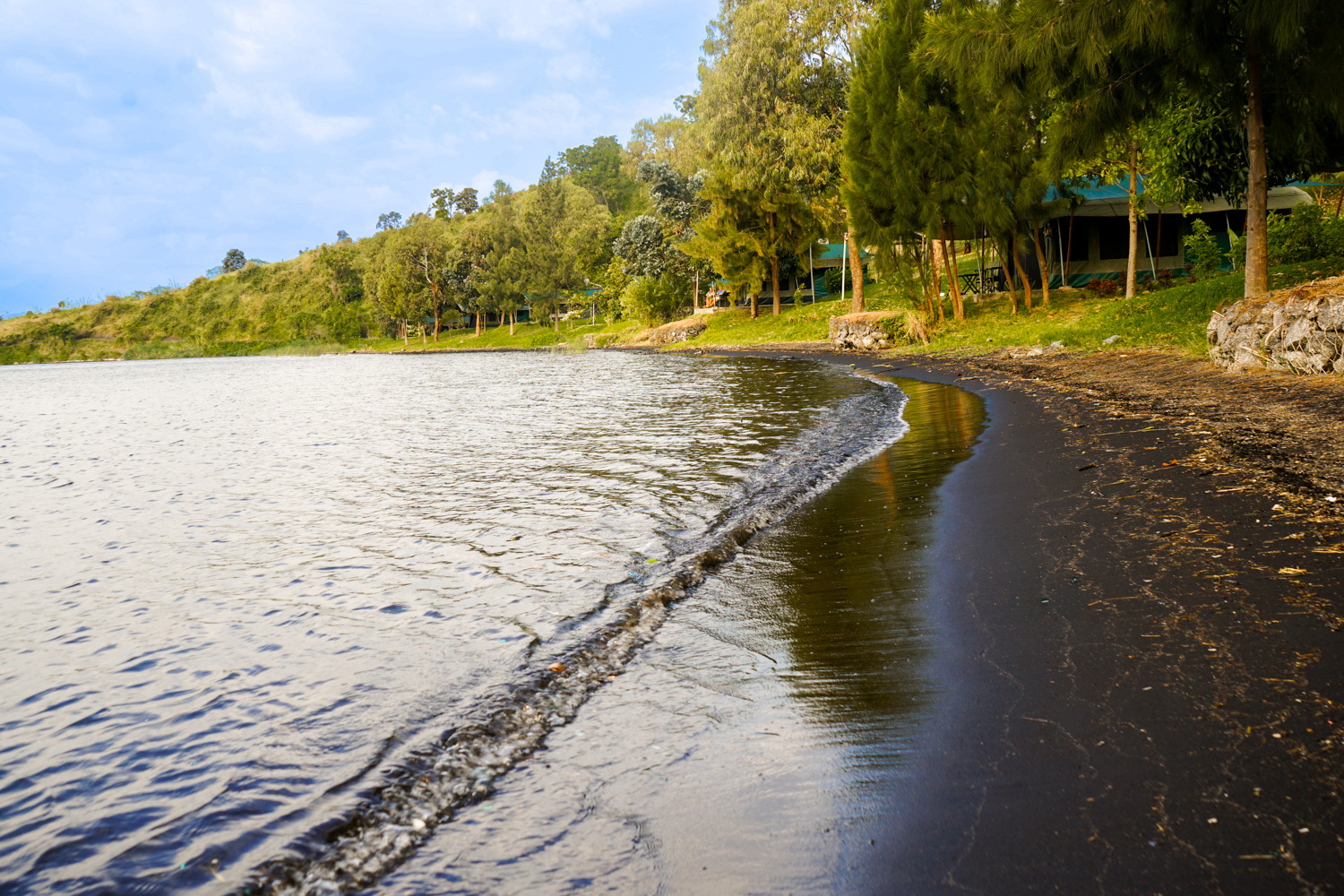
Instead, I grabbed my journal and sat on the black-sand beach to write, eager to jot down every single moment of the past 48 hours to ensure I’d never forget.
That evening, I settled down to dinner on my own, content.
There was a couple of aid workers sitting at a table beside me, and the three of us made up the sum total of guests on the island.
“You’re here on your own?” one of them called over to me.
“Yeah.”
“Who do you work with?”
“Oh, no, I don’t live here. I’m a tourist.”
“On your own?”
“Yeah.”
“Wow. That’s brave.”
“Really brave.”
Welp.
The guy laughed at me and shook his head. He was huge and muscular, and looked like he could be in the military. “I’m not sure I’d be brave enough to travel here on my own,” he announced, and his partner agreed.
I grinned back at him, but felt a sense of unease in my stomach.
What was I doing here? I found myself asking. All 5’1″, 100 pounds of me? Why was I in the Congo alone?
If these aid workers — people who are familiar with the country — were impressed by my boldness, it was probably a fairly good indication that I was doing something reckless.
Still, I’d done my research before arriving. I knew that there had been exactly one tourist death at Virunga National Park in the 100 years it had been open: a woman who slipped and fell into the volcano. Dozens of tourists visited the park every day and had a safe and trouble-free trip.
And I had been safe.
And yet, why did these brave people who chose to base themselves in the D.R.C. think that I was the courageous one?
After a night of card games and multiple bottles of wine, I bid my new friends farewell and made my way along the lakefront to my tent.
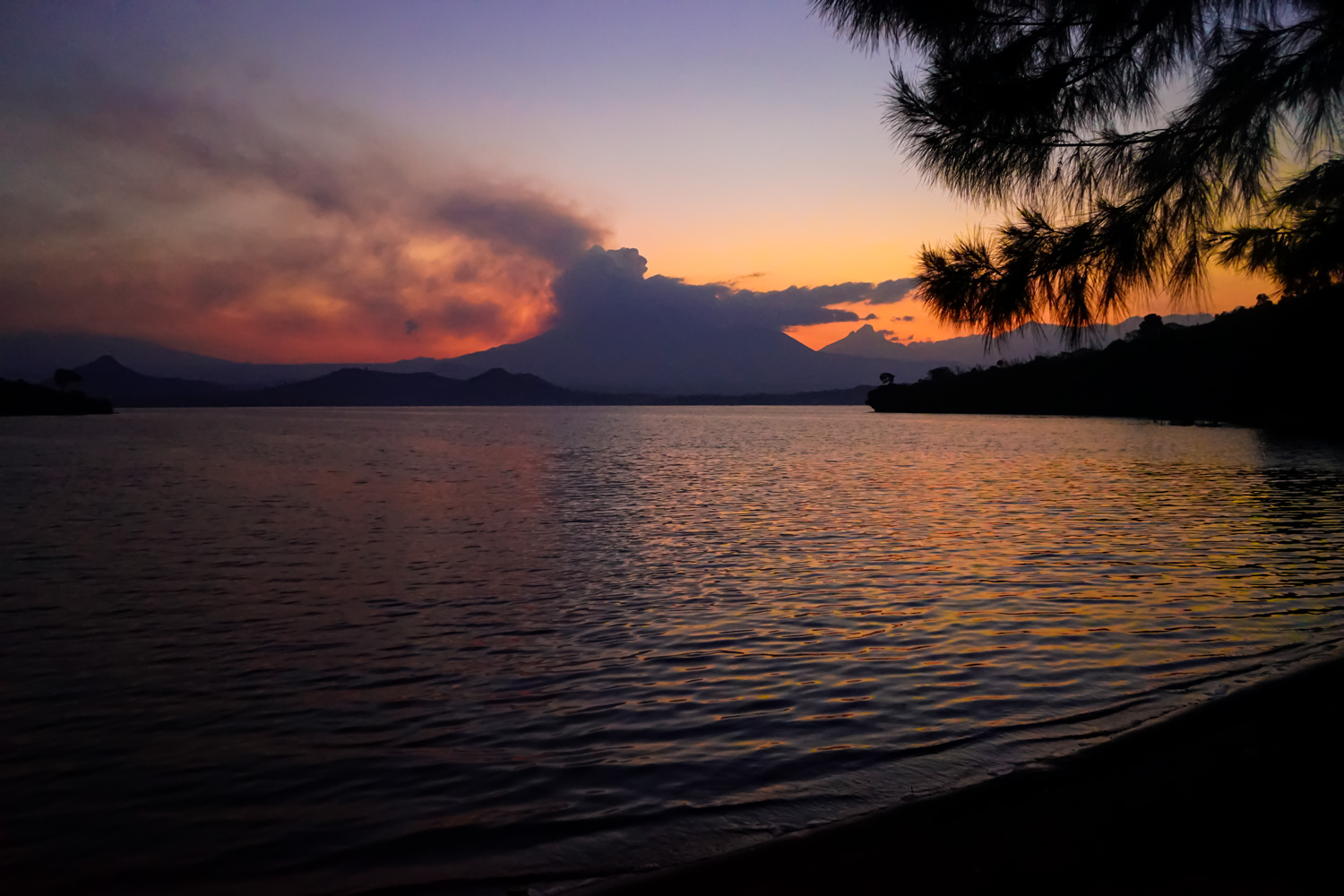
I reached the entrance and paused, looking out at an inky black sky with an orange glow in the distance.
I frowned.
What was that? Some kind of lighthouse? A light on top of a building? A fire?
It suddenly clicked.
That was Nyiragongo. I was seeing the light of the lava illuminating the plumes of smoke from its caldera.
My jaw dropped.
It was impossible to capture the scene with my camera, so I attempted to absorb as much of it as possible instead. I thought about the new group of people who were undoubtedly sitting on top of the volcano, witnessing one of the most incredible sights of their lives.
I wished I was still there.
I couldn’t sleep that night.
As peaceful as the island had felt during the day, the conversation at dinner had worked its way into my brain, and I couldn’t stop wondering about how safe I truly was.
I imagined a group of militia rebels heading out to the lake and motoring over to Tchegera Island with AK-47s in hand. I thought about how my tent was secured by a zip, with no lock or any way to prevent someone from getting in.
I was still awake when the sun rose, and I stretched out my legs and yawned.
Gaahh!
I quickly curled back into a ball again.
My leg muscles were more than a little inflamed from my climb up and down Mount Nyiragongo.
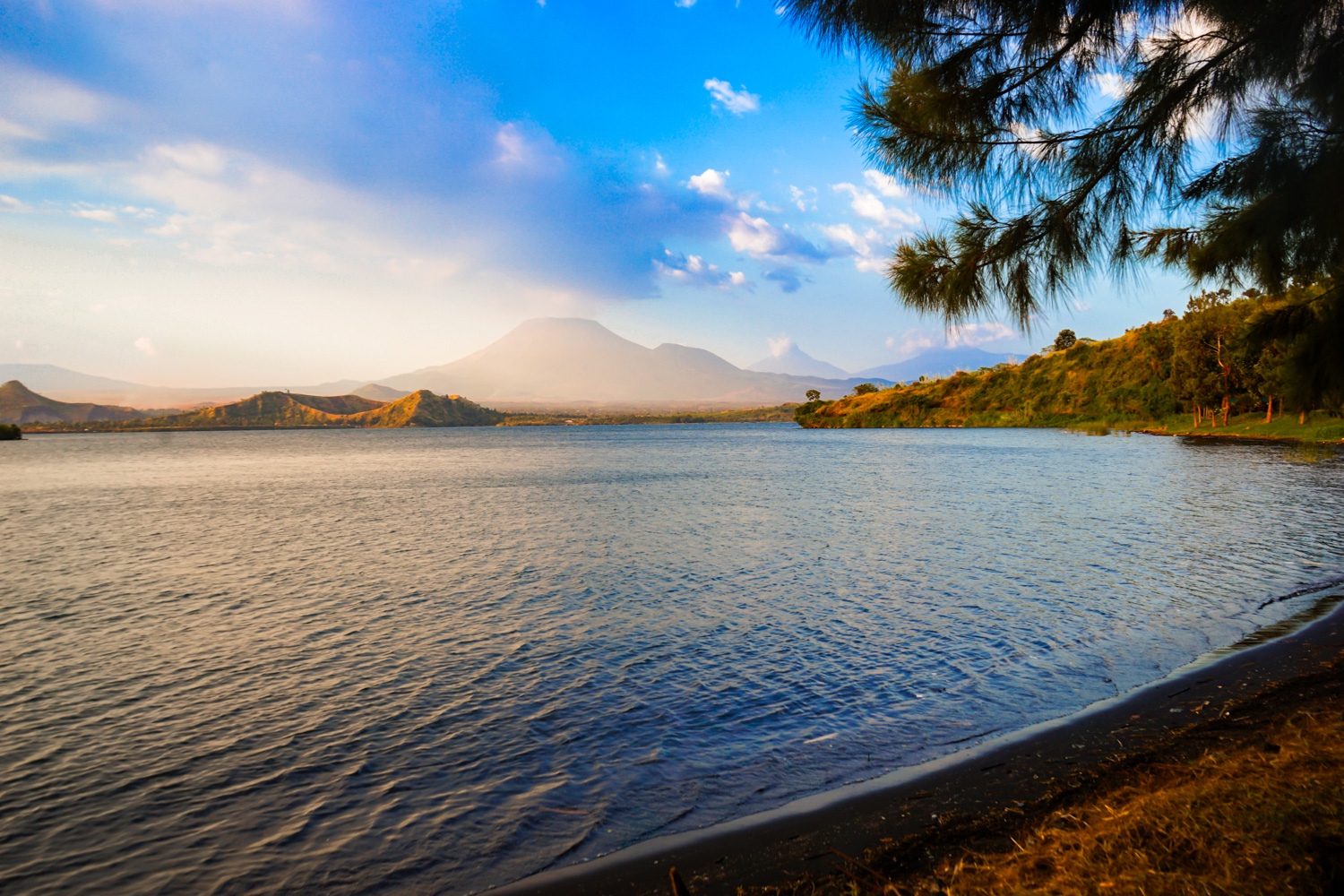
I slid carefully out of bed and fumbled with the zipper on my tent. After letting myself out, I walked the several steps out onto the black-sand beach and was greeted by a beautiful sunrise over the volcano.
I stood and stared at the caldera, thinking about how just 24 hours ago, I’d been at that summit. It felt like it had happened weeks ago.
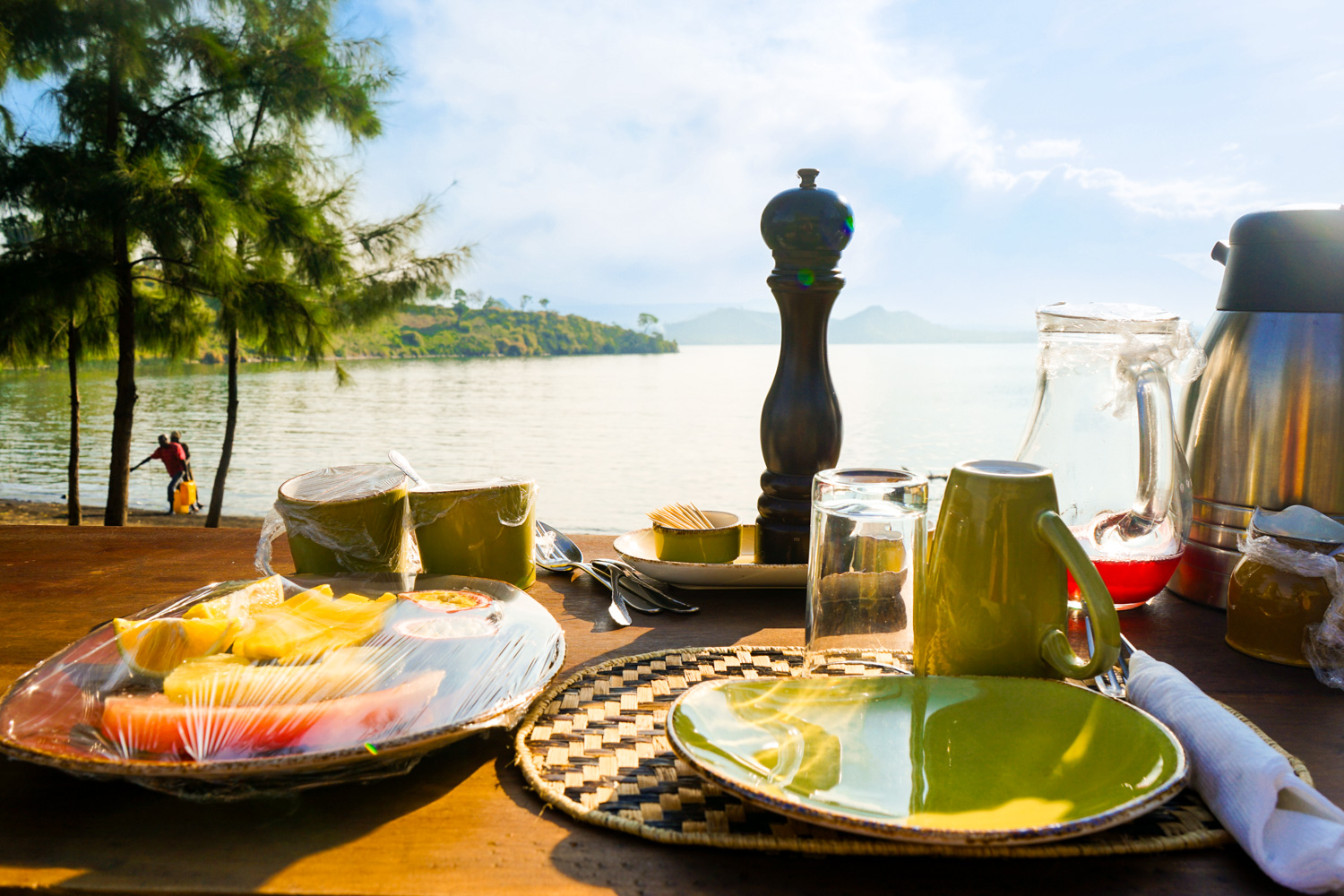
At breakfast, Tchegera was bathed in a warm, soft glow, and it was hard to believe I was in one of the most dangerous countries on the planet.
I couldn’t get my head around the fact that this was a country that was home to Ebola outbreaks, child soldiers, enormous mass graves, schoolgirls being used as human shields, militia raids, so many rapes, and so much violence.
Even the very lake I was sitting on was dangerous.
Beneath the surface of Lake Kivu lies 300 cubic kilometres of carbon dioxide and 60 cubic kilometres of methane. For now, these gases are trapped beneath the water, but if something were to happen — like, say, an eruption of Mount Nyiragongo — the gas could be disturbed, rise to the surface, and instantly suffocate millions of people.
And here I was, tucking into a delicious breakfast while looking out over calm waters and beautiful scenery. I leaned back in my chair and cringed as every muscle in my legs cramped up again.
It was kind of bewildering that such a troubled country had been the backdrop to one of the best trips of my life. I had loved my time here, and I wanted to do more to help. I just wasn’t sure how. I’m not sure anyone does, to be honest.
For now, I was too tired and too sore to contemplate joining an aid organisation in the country or researching charities to donate to.
For now, I was riding the high of several incredible travel experiences.
I had come within metres of a dozen wild mountain gorillas, hiked to the top of the world’s largest lava lake and camped at the edge of its crater, spent the night sleeping out on a tiny island in the middle of a vast lake, and most importantly of all: I had survived.
I knew I had taken a risk by visiting a country so dangerous, but I’d believed I would be okay and it had all paid off.
I had no regrets. Only amazing memories.
As I staggered back to my tent to grab my backpack and begin my journey back to Goma and into Rwanda, I fully allowed myself to relax for the first time since crossing into the D.R.C.
I thought I was okay.
I thought I was safe.
I thought I was in the clear.
Little did I know, I was about to come up against the scariest moment of my life.
But that’s a story for the next blog post.
How to Plan a Trip to Tchegera Island

Tchegera Island is officially located within Virunga National Park, which means the best way to visit is by booking through the park’s website.
As of 2026, due to militia activity in the region, the gorilla trekking and Nyiragongo hike sadly aren’t available to book, but Tchegera Island is still open for visitors. It may not be as spectacular as gorillas and volcanoes, but it is a beautiful spot, safe, and well-worth visiting if you’re keen to see some of the area.
The main benefit of booking your Tchegera stay through Virunga National Park is that once you’ve booked, the park can get a visa for the D.R.C. for you, which is a particularly tricky one to get your hands on.
You can also arrange all of your transportation through their website, from being picked up at the Rwanda border, being driven to the lake, and taken across the water to the island, then back again.
Have any questions? Drop me an email or ask away in the comments below!
Make Never Ending Footsteps a preferred source in Google so you can see more of my travel guides.